

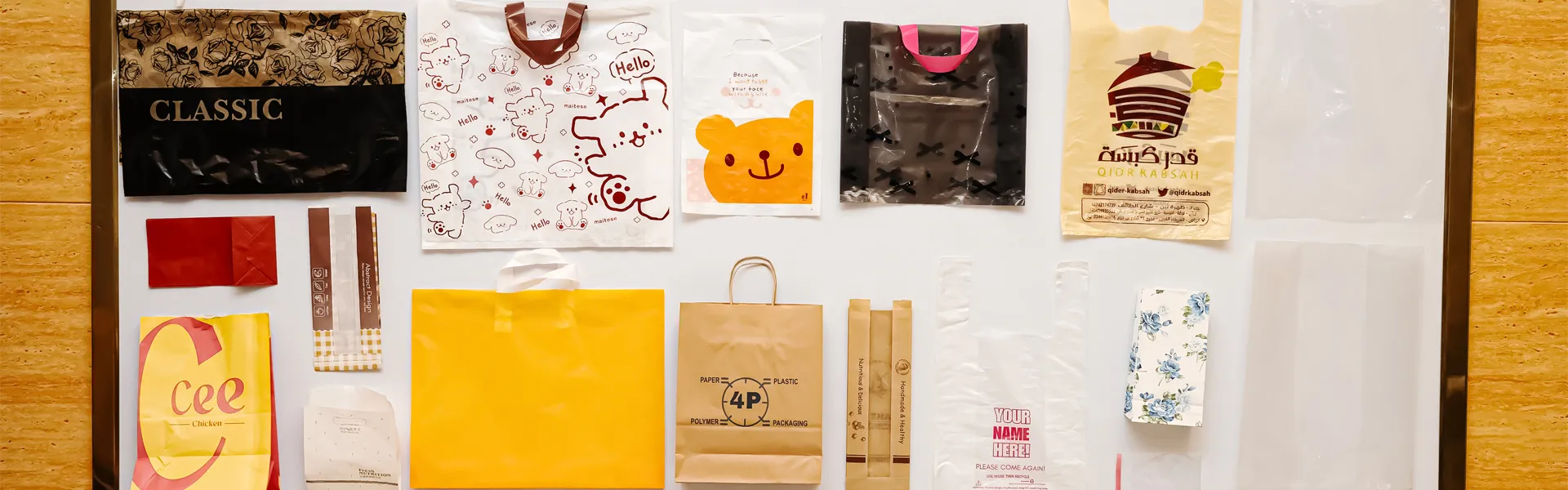
Garbage bags are one of the largest product types in the global soft packaging market. The European Association of Plastic Recycling Organisations estimates that more than 8 million tonnes of polyethylene film are used in household and commercial waste collection in Europe alone each year. Global consumption levels are much higher. At the production end of this supply chain, there is a special conversion device. It is a machine that puts continuous rolls of polyethylene film into the sealed, perforated, and core-wound bags and loads them into domestic and industrial bins. To understand what a Garbage Bag Making Machine is and how it works mechanically, we need to understand how film extrusion, precision sealing, controlled folding and automatic winding work together. These parts determine the function of the machine.
Defining the Equipment
A Garbage Bag Making Machine is a downstream conversion system. It is fed by pre-extruded polyethylene film. This film can be a single layer blowing film or a multi-layer blown film. Or it can be a flat panel that needs folding. The machine then runs the movie through a series of steps. These steps include sealing, perforation, cutting and winding. The end product is finished bag, ready to be packed and shipped. The machine itself does not make film. That job belongs to the blown film extrusion line production line. Instead, the machine is structurally transformed. It creates a bottom bag seal. It allows the perforation line so that users can tear a single bag from the roll. It forms a star-shaped seal or flat seal, which determines how the bag opens and how much weight it can hold.
The difference between a membrane and a bag is the way it works. The American Society for Testing and Materials (ASTM) has a standard called D1709 for impact resistance of polyethylene film. In this standard, the membrane and the conversion bag are measured as two separate things. The film's material properties and the bag's structural geometry affect the properties of the film. A Garbage Bag Making Machine do not change the film's material properties. But it does affect the structural behavior of the bag to a large extent. It is achieved by controlling the geometry, folding and cut precision of the seal.
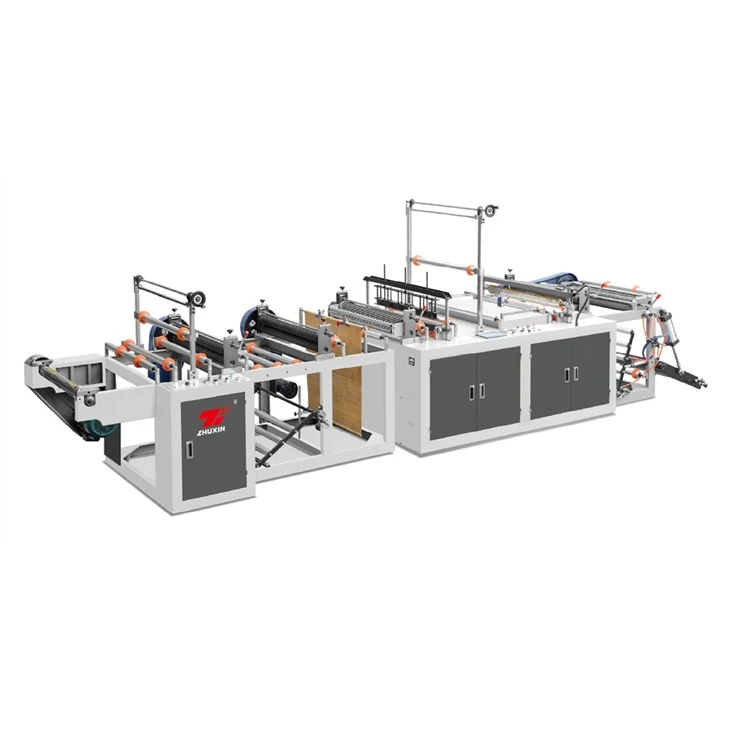
Core Working Stages
Stage 1: Film Unwinding and Tension Control
The process starts with a roll of tubular or flat film. The scroll is mounted on an electric coiling machine. Film rolls used in the production of garbage bags usually weigh between 200 and 500 kg. They can be 1,000-1,500 millimetres wide. The unwinder must deliver the film to the downstream sealing station with controlled tension. For low-density polyethylene (LDPE), the tension is typically 15 and 40 Newtons. If the tension is too high, the film will stretch and narrow. This is called a neckline. If the tension is too low, the film will wrinkle and the seal will dislocate.
The Society of Plastics Engineers (SPE) has technical reference significance for polyolefin film processing. It says the tension control must be accurate to ± N. which is necessary to keep the film size stable. This is especially true for films of 10–25 μm, which are common in household waste bags. Modern machines are implemented by closed-loop feedback based on load cells. Dancer rollers or load cells measure actual web tension between 50 and 100 times per second. The servo drive uncoiling machine then changes its speed to maintain tension at the setting point. When the film runs out, the roll diameter shrinks and the lever arm shortens. So the controller automatically raises the speed proportionally. This keeps the linear tension constant.
Stage 2: Gusset Folding and Centering
If the incoming film is flat rather than pre-intubated, it must be folded into a tube at this point. Two side folding panels will do the job. These are finely formed metal or high-density polyethylene sheets. They create inward gusset folds. The folds narrow the flat width and also allow you to see side creases on the finished bag. For pre-tubed film, this step is not required. Still, the film goes through a flattening section. This section ensures that both gussets have the same depth before the film enters the sealing area.
Theguide rail system uses ultrasonic or optical sensors. These sensors can see where the film is left and right. They then calibrated it in real time through the steering frame on the unwinder. Even a 2mm deviation can cause problems. Bottom seal will deviate from center. This makes the seal margins of the bags uneven. These bags will break when they are filled. TAPPI is the technical association for the pulp and paper industry. Its Converting Division also includes polymer film converting. TAPPI indicated that edge guidance accuracy ±0.5 mm is standard for high-speed bagging devices over 200 laps per minute.
Stage 3: Bottom Sealing
Bottom seal is the most important structural part of garbage bag. It must be tight enough to prevent wet waste from leaking out. It must also be strong enough to hold the weight of a full bag when the bag is pulled by its straps or upper edge.
There are three main seal shapes:
Flat (or straight) seal. It is a horizontal heat seal across the width of the bag. This is the easiest and fastest way. But it puts pressure on the edges of the membrane. The sharp angle between the thick bead and the film will crack under load. Research published by the Society of Plastics Engineers in its ANTEC Conference Proceedings showed that bags break are between 65 and 75 percent of star pack capacity. This is due to stress at the seal edge edges.
Star seal (or seam seal). The gusset folds opened at the bottom. The film is collected in asterisks or asterisk pattern. Then a circular or curved seal welds all layers at the same time. This spreads the pressure over many curves, not just two corners. It also gets rid of the slit pockets that capture liquid in a flat seal design. United U.S.. Environmental Protection Agency (EPA) studies municipal solid waste. It says the star-sealed structure is the main shape of heavy waste bags as it resists leaks and balances load support.
C Fold (or flat-bottom) seal. This is a hybrid design. The bottom is flat sealed but has a double fold to make a gusseted base. This gives a flat bottom to the bag, standing in the bin. But it requires a more complex sealing station with two parallel seal bars that operate at slightly different temperatures.
The sealing mechanism adopts hot rod or rotary knife. Low density polyethylene (LDPE) is kept at 160–200° C. The exact temperature depends on the film gauge, resin melt index and linear velocity. seal bar presses the film to the silicone rubber backup roller for a fixed stay of 0.15–0.4 seconds. The International Organization for Standardization (ISO) has ISO 11607-2 for end-of-life sterile packaging. This standard shall be used for the test of its sealingstrength. It says the polyethylene film should have a thermal seal strength greater than 5N per 25mm of seal width. This can be achieved by the A Garbage Bag Making Machine by keeping seal temperature uniform within ±5°C throughout the width. This tolerance requires a embedded thermocouples to be placed every 50 mm.
Stage 4: Perforation and Cutting
When the bottom seal is complete, the film moves to the perforation station. Here, a spinning knife or fixed blade forms a dotted line. The line allows users to tear individual bags from scrolls. The perforation had to be deep enough for someone to tear it open by hand. According to ASTM D1922, this usually requires tear force of 3 -8 N to improve tear resistance. But it can't be so deep that the bag can be torn open during winding, transport or use.
The incision that separates one bag from the next is made at the same time as the bottom of the next bag is sealed. Or right after the seal. Therefore, each sealing cycle is a complete bag. Cutting blades are usually rotating circular knives. It is made of high-speed steel or tungsten carbide. The blade works on an anvil roller with a control gap of 0.02 -0.05 mm. Journal of Applied Polymer Science is published by Wiley Press. The results show that the sharpness of the blade directly influences the cleanliness of the cutting. A blade with a radius of less than 2 μm is cut clean. This clear cut does not leave a slight tear mark on the film. But blades with a radius of more than 5 microns have rough edges. When the bag is loaded, this rough edge develops into a seal failure.
Stage 5: Folding and Core Winding
Finished bags are wrapped around paperboard cores for retail wrapping. The inner diameter of these cores is usually 38 mm or 76 mm. The winding station must fold the cloth bag in a certain pattern. Common patterns are C or a trifold. This folding makes the roller smaller in diameter. It also makes individual bags come out clean when pulled.
A Garbage Bag Making Machine adopts folding board. The board sits upstream of the winding machine. It creates the required fold pattern, while the film is controlling tension. The winder is a central driving system. The core rotates on a motorized shaft. As the diameter of the roller increases, the tension decreases. This prevents the inner layer from being crushed by the weight of the outer layer. This tapered tension control is very important. Flexible winding films are also covered by the Technical Standards of the The Association of Nonwoven Fabrics Industry (INDA). INDA says a 30 30 – 50 percent ratios is best. This means that the final winding tension is 30–50 percent% of the initial tension. These ratios prevent the expansion of the roll and the deformation of the core in a multilayer roll.
For paperback bags, this is a separate folding bag, rather than a roll, with a different path. The path branched off behind the cutting station. A stacker collects and counts bags. The folder then applies the final folding mode. Then, put the bag in the box.
Drawtape Integration
Many household waste bags have suspenders. This is a narrow strip of film, usually 6 -10 mm wide. It runs along the top edge of the bag, sticking out in knots on either side. Adding drawtape production to a garbage bag maker requires two extra parts. The first is a tape extruder or tape cutting module. This causes the drawtape to reel from the second film. The second is bonding station. This hot welded or ultrasonic adhesive tape has a top and bottom hem in the sealing cycle.
The ultrasonic bonding method is becoming more common. It doesn't need adhesives. This avoids temperature-sensitive problems. The Edison Welding Institute (EWI) is an independent material joining the research team. EWI published a study in this regard. The results show that ultrasonic peel strengths strength of polyethylene drawtapes is 12 – 18 N/ 25 mm. This is above the 8N threshold required for reliable bag closure. It uses 60 percent less energy than thermal bonding of the same connector.
Material Considerations and Sustainability
The main material of waste bags is low density polyethylene (LDPE) or linear low density polyethylene (LLDPE). High density polyethylene (HDPE) is used to make thinner, cheaper bags. The European Chemicals Agency (ECHA) operates under the REACH regulation. It monitors additives used in plastics, such aserucamide, silica and colorants (carbon black for black bags and titanium white for white bags). New rules have sparked interest in post-consumer recycled (PCR) content. Packaging and Packaging Waste Regulation sets a recycling target of 35 percent cent for plastic packaging by 2030. This directly changes the selection of materials and the way machines are handled.
A Garbage Bag Making Machine must be able to adapt to the different flow characteristics of PCR blends. Compared with the new resin, recycled polyethylene has a wider molecular weight range and greater melt flow variation. This results in smaller film thickness and more gel particles. These are specks of unmelted resin specks that can cause seal problems. Changes in the machine include slightly higher seal temperatures of around + 5-10°C. Longer stopping times of around +0.05 seconds are also included. They need to examine the blades more frequently to deal with abrasive dirt in PCR films.
Quality Control and Testing
Finished package is subject to standard inspection to test its performance. Key tests include:
Drop test (ASTM D5276). A weighted bag fell from a certain height. This mimics the impact of being thrown in a bin or bin. Star-shaped bag usually survives a drop of between 1.2 and 1.5 metres with a weight of 5kg. Under the same load, the flat-pack will fail at 0.8–1.0 m.
Seal strength (ASTMF88). This is a peel test of the bottom seal. It measures the force needed to break the seal. The minimum acceptable value for household plastic bags is 5 N/25 mm. The value of heavy contractor package is 12 N/25 mm.
Puncture resistance (ASTM D4833). This measures the force required to pierce the film with a cone. It simulates contact with sharp waste. Typical values of 15 – 25 μm LDPE film were 5-15 N.
The International Trade Centre (ITC) is a joint agency of the United Nations and the World Trade Organization. ITC has included these testing methods in its technical procurement guide for waste management supplies. These guides are available to city and institutional buyers. This ensures that machine-made bags meet contract performance standards prior to shipment.
Conclusion
A Garbage Bag Making Machine is a multi-stage converting system. Its main job is to make continuous polyethylene film into sealed, perforated, and wound bags. This job depends on the precise coordination of unfolding tension, creases, thermal seals, perforation cutting and curling of geometric shapes. The machine's performance is not only measured by speed of production, the standard setting is typically 150–250 cycles per minute. It can also be measured by the structural strength of the bags made. This strength depends on the temperature uniformity of the seal, blade sharpness, perforation depth and the distribution of stress throughout the seal pattern. With the new rules, converters will shift to recyclable films, waste sorting systems will require more types of bags and machines' ability to handle different materials while maintaining sealing and cutting quality will have an increasing impact on their production value
References
- European Association of Plastics Recycling and Recovery Organisations (EPRO). European Plastics Recycling Market Statistics and Material Flow Analysis.
- ASTM International. ASTM D1709 - Standard Test Methods for Impact Resistance of Plastic Film by the Free-Falling Dart Method.
- Society of Plastics Engineers (SPE). Technical Reference on Polyolefin Film Processing and ANTEC Conference Proceedings - Seal Geometry and Load Performance in Waste Bags.
- TAPPI Converting Division. Technical Guidelines for Flexible Film Converting Operations.
- U.S. Environmental Protection Agency (EPA). Municipal Solid Waste Characterization Studies - Packaging and Container Analysis.
- ISO 11607-2:2019. Packaging for terminally sterilized medical devices - Part 2: Validation requirements for forming, sealing and assembly processes.
- Wiley - Journal of Applied Polymer Science - Blade Edge Geometry and Cut Quality in Polyethylene Film Converting.
- INDA - Association of the Nonwoven Fabrics Industry. Technical Standards for Flexible Film Winding and Core Management.
- Edison Welding Institute (EWI). Ultrasonic Bonding of Polyethylene Film Joints - Strength and Energy Performance Studies.
- European Chemicals Agency (ECHA). REACH Regulation - Additive Monitoring for Polyolefin Film Formulations.
- ASTM International. ASTM D5276 - Standard Test Method for Drop Test of Loaded Containers; ASTM F88 - Standard Test Method for Seal Strength of Flexible Barrier Materials; ASTM D4833 - Standard Test Method for Resistance of Geotextile to Puncture.
- International Trade Centre (ITC) / WTO. Technical Procurement Guidelines for Waste Management Supplies.


