

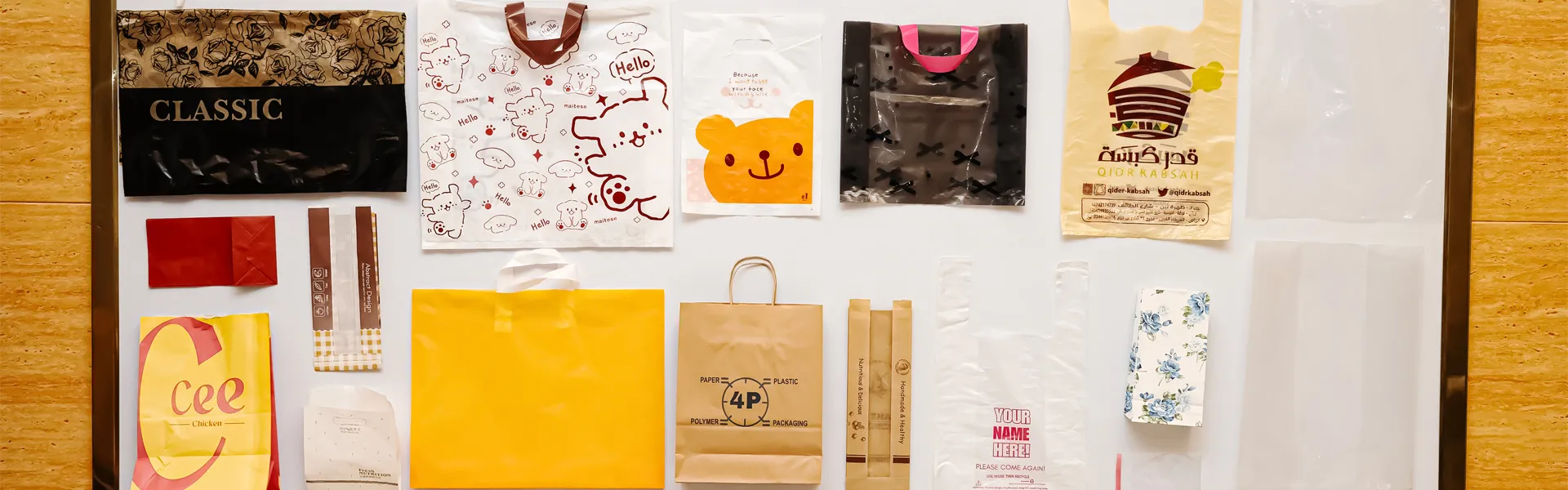
The retail packaging industry has changed. A large order for a product type once the production schedules has been met. Now brand owner wants a sprint. They need a lot of bag size, print design, and material type. The change comes from online sales, more store brands and new rules on waste. Therefore, conversion equipment must be converted quickly. But it still has to be of high quality. Retail baggers solves the problem. It uses interchangeable parts, digital settings storage, quick size changes and built-in quality checks. So converters can make money on small orders. Old machines with fixed parts couldn't do that.
The Economics Of Small-Batch Production
The old bag production line is 50,000 to 200,000 units each. The 30-to-60-minute changeover cost was spread across millions of bags. But the average order has now dropped below 10,000. The International Trade Centre (ITC) says this is more common among mid-market retail brands in rich countries. So the transition started taking longer than production time. That reduces contribution margins by 25 to 40 percent.
The Manufacturing Performance Institute uses data from ISO 22400-2 as key performance indicators. It notes that in hybrid models, long-running machines with Overall Equipment Effectiveness (OEE) of above 75 percent tend to be below 45 percent. The decline is not due to slower speeds. It comes from free time for mechanical changes, material threading and first quality checks. The new retail bag machine solves that problem. It shortens these non-value-added steps by engineering changes rather than by adding workers. This Retail Bag Making Machine approach directly addresses the margin erosion caused by frequent changeovers.
Servo-Driven Format Changeover
The biggest change is the use of servo-driven parts with programmable logic controllers (PLC). They replace mechanical cams, fixed stroke linkages and manually adjustable folding parts. On a servo-based machine, set bag width, tie-in depth, bottom fold shape and cutoff length by calling saved recipes. You don't have to turn the handwheel.
The the Institution of Mechanical Engineers' findings were published in Proceedings of the Institution of Mechanical Engineers, Part B: Journal of Engineering Manufacture. The results showed that servo-driven bag machines reduced average time for format conversion from 35–50 minutes to 4–8 minutes. It's down 80 percent. The improvement came from three sources, the study showed. First, there is no need for mechanical timing, as servo axes uses an electronic cam profile to synchronize itself. Secondly, automatic location registration uses the encoder to store absolute position + -0.05 mm. Third, accumulator-driven parameter settings recall temperature, pressure, and velocity values at once.
For retail bag makers with five to eight format changes per shift, the time saved could save between 2.5 and 3.5 hours of production time per day. That's enough to receive six additional small batches of orders without adding to shifts. A modern Retail Bag Making Machine leverages these servo-driven capabilities to turn frequent format changes into a competitive advantage rather than a productivity drain.
Automatic Roll Splicing And Material Threading
Small-batch, high-variety production often means changing substrates. Swap 80 g/m2 brown kraft of brown brown brown paper for 120 g/m2 white kraft of white brown paper. Or you could switch from uncoated paper to polyester. Or moving between different net widths. Each replacement requires the machine to stop. Then you hand-stitch the new scroll together with the end of the running net. The material is then threaded again through guide rollers, folding table and sealing port.
The European Union of Papermaking Associations (EUROSAC) is the European federation of sack kraft paper makers. Its technical guidelines show that automated fly-tipping system reduces the downtime of the substrates to less than 45 seconds. Manual splicing takes 8–12 minutes. The flight splicing works by accelerating new reels to straight-line speed through a surface-driven coiling machine. Then attach the prepared tape strip to the running web at the correct moment of overlap. The machine doesn't stop.
After stitching, automatic threading systems uses pneumatic shuttle belts or vacuum-assisted feed strips. They can carry new nets across the material's path in 60–90 seconds. The Paper and Paperboard Packaging Environmental Council (PPEC) says the automation eliminated the biggest cause of downtime in mixed modelling work. This is because of the different thread threading skills of operators of different material grades. For any Retail Bag Making Machine handling diverse order mixes, automatic splicing and threading are essential to keep non-productive time to a minimum.
Recipe Management And Digital Job Queues
A retail bag maker that processes many different orders using a Manufacturing Execution System (MES) interface. The system does more than just store recipes. The Ministry of The MES obtains work orders electronically. It uses standard protocols such as the International Society of Automation's ISA-95. Jobs are then sorted to reduce the overall changeover time.
Sorting logic groups jobs by material type first. This reduces the number of splicing events. Then group according to the width of bag. This reduces the variation of the hinge board in each material group. Finally, they are grouped by graphic design. This reduces the variation of the upstream printing plate. The Institute of The Society of Manufacturing Engineers has published case studies. They show that smart job sequencing can reduce total daily changeover time by 30–40 percent compared to servo-driven hardware alone. This effect is sometimes referred to as "flexibility." It doesn't need a new machine. You only need to software optimization.
When the job reaches the front of the queue, the MES sends the recipe to PLC. All settings will load automatically. Including bag dimensions, sealing temperature distribution, adhesive use, cutting position and quality inspection threshold. The operator's job changes changed from mechanical adjustment to checking things out. The operator confirms that the loaded substrate matches the material in the recipe. The operator then releases the machine and begins production.
Inline Quality Verification For Short Runs
In long-run production, operators had time to manually detect and resolve quality issues. After a few hundred units, poor sealing or uneven wrinkling can occur. Then it continued to run with little waste. In small batches, an order of 5,000 units can be completed before anyone sees the defect.
To solve this problem, a new retail bag maker has an inline vision systems. The systems check each bag at full speed. The Association for Packaging and Processing Technologies (PMMI) describes the performance of packaging line in its report. Machine vision systems on flexible packaging devices can check more than 400 machines a minute, the company said. They are 99.5 percent accurate and can spot common flaws such as seal quality, folding accuracy, clean cutting and print alignment.
These visual systems provide data for statistical process control. The algorithm then triggers an automatic fix. If the folding width moves by 0.3 mm, the servo controller moves the position of the folding press by 0.05 mm. Operators don't have to do anything. This closed-loop approach is explicitly accepted in the The ISO 9001 quality management framework. Article 8.5.1 states that the organization must ``control process outputs to prevent nonconformity ''. Automated SPC provide a real-time way to meet this rule on highly variable lines. On these lines, manual sampling is too slow to work properly. A Retail Bag Making Machine equipped with inline vision ensures that even the first bag of a short run meets quality standards, eliminating the risk of completing an entire order before a defect is spotted.
Modular Tooling And Quick-Change Consumables
Even with servo-driven adjustment, certain physical components must be changed if the format varies too much. For example, a bag width from 250 mm to 420 mm may require new folds, seals or cut cylinders. Current machines use methods derived from a single-minute mold-switching (SMED) system. the Japan Management Association formalized the system.
Insider tasks are tasks that require machine shutdowns. These are kept to a minimum, with tools placed on quick-release mounting blocks with repeatability pins. External setup tasks can be completed while the machine is still running the last task. This includes preheating the seal to the correct temperature, preinstalling the next substrate roll to the unwinder standby position, and preinstalling adhesive nozzle. At the end of the current operation, the operator will replace the die one at a time. Color-coded locator boot. Operators attach preheated rods to sealing stations and release new recipes. This usually requires downtime of 90-120 seconds.
The European Committee for Standardization (CEN) has a technical specification called CEN/TS 15901. It handles automated optical inspection in packaging. The CEN says a quick-change tooling would also help with consistency of testing. When the vision system's reference image linked to the loader's formula, first pass rate for the new format was 97–98 percent in the top 50 units. When operators manually adjust inspection parameters, first pass rate is only 85–88 percent.
Energy And Material Efficiency In Intermittent Production
Frequent start and stop cycles consume more energy than steady state production. The the sealing jaws must be re-heated each time the retail bag maker restarts after replacement. Adhesive tank thickness must meet the requirements for application. the servo systems must pass through acceleration profiles.
The European Commission's Joint Research Centre presented the paper and cardboard conversion industry in its BAT reference document. It says the standby thermal management systems seals the clamps at 85–90 percent working temperature in its spare time. These systems reduce reboot energy consumption by 60 percent. They also reduce re-thermalization time from 4–6 minutes to less than 60 seconds. On-demand adhesive melting systems divides hot melt into small batches of 50g to 100g, which won't always keep the tank full of five litres. These systems reduce the energy consumption of adhesives by 40 percent. They also reduce the decomposition of materials during prolonged inactivity.
Waste of material during formatting changes has been addressed through the Prediction Cutoff System. When MES signals a change in job, the machine calculates the remaining web length needed to complete the current order. It slows down where the last bag is cut. It doesn't run for extra material and throws away 15–25 meters. The Food and Agriculture Organization the United Nations United Nations (FAO) provides guidance on optimizing sustainable packaging material. It said this "right-sized run termination" would reduce formatting waste by 70 percent. This is important when the converter changes format 12 to 20 times a day.
Workforce Implications
The changeover from mechanical to digital has changed the skills needed by operators. Old machines needed experienced technicians with a deep sense of timing adjustments. Server-based machines require skills in recipe management, HMI navigation and problem handling. The International Labour Organization (ILO) conducts sectoral studies on how manufacturing skills are changing. The shift to digital manufacturing typically reduces the number of operators on each route by 30–40 percent, the report said. At the same time, skill premium for the remaining personnel will be increased by 15–25 percent.
For converters handling many different orders, this means a clear training plan for purchasing retail bags. Operators must be aware of the physical steps involved in moving materials and replacing molds. They must also understand the logic of recipe parameters. For example, they need to know why PE coated substrates need to be seal temperature 15°C higher than uncoated kraft. They had to know how to check that the formula matches the load.
Conclusion
Changing bagging equipment for small, high-variety orders is not the same thing. It's a complete system. Servo-driven parts replace manual adjustment. Flying-splice unwinders deletes thread downtime. MES-driven job sequencing improves the changeover order. Inline vision guarantees quality from the start. SMED-based tool design reduces physical settings to less than 2 minutes. All these parts work together. As a result, retail bagging machines can have an OEE levels more than 70 percent%. This happens even when it processes fewer than 10,000 orders on average. Old devices often couldn't get close to that number. Retail packaging is increasingly fragmented among private brands, regional markets and seasonal events. As a result, this production flexibility will shift from a special advantage to a basic needs converter that wants to stay in business. The integrated design of the modern Retail Bag Making Machine makes this level of flexibility achievable, transforming what was once a technical barrier into a core business enabler for converters.
References
- International Trade Centre (ITC) / WTO. Packaging Machinery Procurement and Total Cost of Ownership Guidelines for Emerging Markets. Geneva.
- ISO 22400-2:2014. Automation systems and integration - Key performance indicators (KPIs) for manufacturing operations management - Part 2: KPI definitions.
- Institution of Mechanical Engineers (IMechE). Proceedings of the Institution of Mechanical Engineers, Part B: Journal of Engineering Manufacture - Servo-driven changeover performance in flexible packaging equipment.
- EUROSAC - Fédération Européenne des Fabricants de Papier pour Sacs. Technical Guidelines for Sack Kraft Paper Converting Operations.
- International Society of Automation (ISA). ANSI/ISA-95: Enterprise-Control System Integration.
- Society of Manufacturing Engineers (SME). Manufacturing Engineering Case Studies on Job Sequencing and Soft Flexibility.
- Association for Packaging and Processing Technologies (PMMI). Packaging Line Performance Benchmarking Report.
- ISO 9001:2015. Quality management systems - Requirements.
- Japan Management Association. Single-Minute Exchange of Die (SMED) methodology and implementation framework.
- European Committee for Standardization (CEN). CEN/TS 15901 - Automated optical inspection in packaging.
- European Commission Joint Research Centre (JRC). BAT Reference Document for the Paper and Board Converting Industry.
- Food and Agriculture Organization (FAO) of the United Nations. Sustainable Packaging Material Optimization Guidelines.
International Labour Organization (ILO). Sectoral Studies on Skills Evolution in Digital Manufacturing.


