

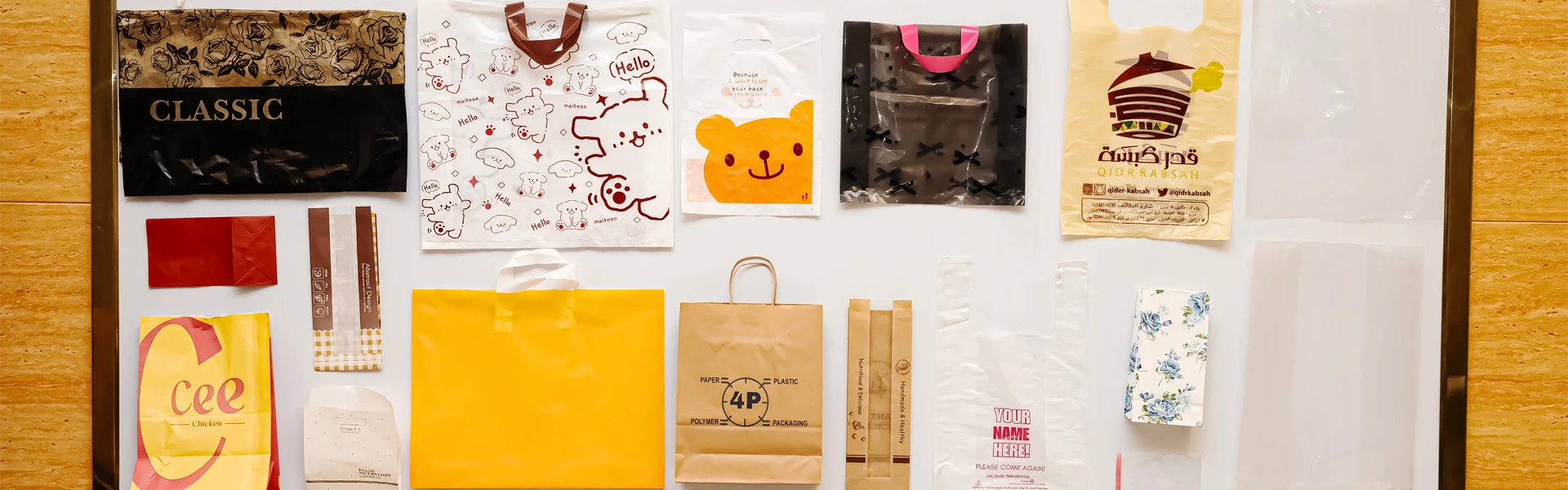
Supermarkets are using plastic bags at an alarming rate. A medium-sized retail chain can use more than a million bags a week in all its stores. The manufacturers that supply these bags work under constant pressure. Profit margins are low. Delivery times are strict. The downtime period meant not only the loss of time, but also the loss of contracts. Supermarket bag making machine models are not only inefficient, they can't run fast enough. It's not a good business choice.
This paper introduces the engineering and operation method of making modern supermarket bag making machine systems run continuously at the speed of 400 units per minute. It must also maintain a low dimension accuracy, seal strength and material loss.
Framework Continuous Operation
Servo-Driven Motion Systems Replace Mechanical Cams
Vintage bag makers used mechanical cam systems for sealing, cutting and folding. These systems worked well, but with clear limitations. With each product change, you manually adjust the camera. As cam followers dwindle, so does time. Over time, this made the output quality worse and worse.
New machine veers almost entirely towards servo-driven designs. Each main station-a film feeder, seal bar, a cutter, a folding machine and bag stacker-has its own servo motor. Central motion controller coordinate all this. This eliminates the mechanical connection between stations. It also allows you to digitally change timing settings in seconds. You don't have to reconfigure things by hand.
Research in the IEEE Transactions in Industrial Informatics shows that servo-based packaging machines achieved 99.2% mechanical availability over 30 consecutive days of operation. Cam driven machines are only 94.5%. This difference-almost 5 percentage points-means thousands more bags per shift (IEEE, 2021).
Such poor reliability is not good for supermarket bag makers. It determines whether you will encounter or miss a weekly delivery to the store's distribution center.

Constant Material Delivery via Flying Connection
The biggest problem with back-to-back sacks is rolling. A standard grocery bags roll in polymer film can last 20 to 45 minutes at full speed. When the scrolling is over, the machine either stops or, if it has the right system, does a flying splice.
When the running roller is almost empty, the flight splice system finds it. It sped up a new roll to match the speed. Then tape the ends of the old rolls to the beginning of the new ones. The whole process doesn't slow down the network or stop output. On machines without this feature, downtime of 3 to 7 minutes is required for each roll change. That equates to 40 to 90 minutes of lost production in a single shift.
In its technical guidelines on packaging material efficiency, the Food and Agriculture Organization of the United Nations (FAO) states that automatic splicing systems reduce material waste by about 2.5%. They can also significantly improve overall efficiency of equipment during mass conversion operations (FAO, 2022).
Automated Roll Loading and Web Threading
In addition to splicing, putting a new roll of film on the release rack is another way to slow down. An entire roll of grocery bags weighs between 800 and 1,200 kilograms. Manual loading and unloading requires a forklift, two workers and a downtime of 10 to 15 minutes.
New supermarket bag making machine systems have an electric spreader and a hydraulic or pneumatic chuck systems. They can remove new rollers directly from the feed conveyor. Once the stitching is complete, the operator starts an automated web thread sequence. This will be sealed through the machine's dance roller, foldable foldable foldable foldable foldable foldable foldable foldable foldable foldable foldable foldable foldable foldable foldable foldable foldable chain with belt-driven chain. You don't have to pull with your hands. This reduces thread processing time from 15 minutes to less than 3 minutes. It also eliminates the risk of injury to workers when pulling a net through a machine that is production tension.
Heat Management Under Sustained Load
Heat Seal Bar Cooling and Temperature Stability
Plastic grocery bags are sealed with heat. Each seal cycle requires a sealing rod of 160-200°C. He presses the film and pulled it back. At a rate of 400 bags per minute, the seal circulates almost seven times per second. If you don't manage the heat well, the bar's temperature will rise with the heat. This leads to over-sealing, which weakens the film next to the seal. Otherwise it will lead to under-sealing and weak bonding.
A well-designed supermarket bag maker fixes this with active cooling seals. The bar's cooling channels contain temperature-controlled liquids, usually water or a water-glycol mix. This takes excess heat between cycles. Thermocouple sensors gives real-time feedback to the temperature controller at several points on the rod. The controller then changes the heater's power in milliseconds.
A study published in the Journal of Manufacturing Science and Engineering found that in continuous thermal sealing systems, active temperature control reduced the variation in seal strength by 60% compared to passive convection-cooled bars. It also virtually eliminates cold sealing defects that occur in high-speed uncooled systems (ASME, 2020).
Bearing and Drive Thermal Monitoring
Continuous running not only heats up in the sealing station, but also in the rotating parts of the machine. Bearing, sealing cam followers and cutter stand on main drive shafts will heat up under stable load. If not careful, bearing overheating can damage the lubricating oil. This accelerates wear and tear and can lead to major breakdowns.
High-performance machines install temperature sensors at key bearing spots spots. When the operating temperature exceeds the set limit, the control system will sound an alarm. In some cases, the system itself slows production and cools the parts. This will prevent breakdowns without the need for downtime.
Predictive Maintenance and Uptime Engineering
State Monitoring Through Vibration Analysis
The difference between planned maintenance and unplanned failure is a key measure of continuous production. Unexpected outages of the bagging line can cost more than $200 a minute in lost output. It also causes delivery delays. Supermarket bag making machine units are designed to operate 24 hours a day and must detect problems before they occur.
Modern machines use accelerometers on key parts. Mainly bearing, gearbox, servo motors and cutting assembly. These sensors constantly detect vibration signals. When the bearing starts to crack or the gear starts to crack, the vibration frequency pattern changes obviously. Machine-learning programs trained in normal vibration mode can detect these changes days or even weeks before the parts actually fail.
This The International Organization for Standardization covered by ISO 10816. This standard provides rules for the evaluation of vibration severity evaluation of industrial machinery. Machines built for uninterrupted use usually aim for vibration levels below the ISO 10816 zone limit. They automatically warn when a reading enters B (ISO, 2017).
Tooling Wear Management
Cutters and bar surfaces are worn parts. A tungsten carbide cutting edge of a high-speed bag maker may need to be replaced or polished after 8 million to 12 million cycles. That is, about 2-3 weeks of continuous production. The prediction system does not wait for poor cutting quality, but calculates the total cutting cycle since the last tool change. Replacement is then scheduled within the scheduled maintenance time.
This method, along with statistical process control data on bag size accuracy, allows maintenance team to change the mold before quality starts to decline. This will not only prolong the service life of the tool, but also will not produce inferior products.
Quality Assurance of Production Speed
Inline Vision Systems
Mass production is useless if production does not conform to regulations. Manual sampling, in which a bag is taken for inspection every 500 or 1,000 units, does not capture random defects that occur between inspections.
Supermarket bag making machine models feature inline vision systems for continuous production. They check each bag as it leaves the cutting station. High-speed camera captures the seal area, handles the cutoff, and overall bag size at full speed. Image processing program compares each bag with a reference model. They mark problems such as incomplete seals, missing handle cuts, size error limits, or dirty surfaces.
The European Committee for Standardization (CEN) Technical Specification CEN/TS 15901 deals with automatic optical inspection in packaging production. It recommends 100% online inspections of products whose structural failures could pose a safety risk to consumers. Grocery bags carrying heavy or hot items are a good example (CEN, 2021).
Energy Efficiency Under Continuous Load
Running a machine for weeks on end takes a lot of energy. High-speed bag production lines can run 25 to 40 kW. Energy efficiency is therefore important for both the environment and the budget.
Servo-driven machines are naturally more efficient than hydraulic or pneumatic ones. They use power only when and where they need it. Regenerative servo drive capture energy from slow steps, such as when seal bar is pulled back. They send energy back to the machine's power system. In addition, backup power management shuts down unwanted parts, such as heaters, conveyor belts and lights, at short notice. This will reduce energy waste during a break.
Conclusion
Meeting the need for mass production is not about building faster machines. It requires a system-wide approach that takes into account every possible bottleneck. These steps include material feeding, heat control, parts wear, quality checks and energy use. Supermarket baggers achieve stable production through servo-driven precision, automatic roll handling, active heat management, predictive maintenance and online quality inspection. All of this work together to keep bags flowing at a rate of several hundred a minute, in shifts and with little help. A well-tuned supermarket bag making machine synchronizes all these systems to achieve consistent output while maintaining bag integrity across every unit.
As retail supply chains keeps to demand shorter lead times and delivery schedules times, the engineering complexity of this equipment will be even more important to the cost and performance of flexible packaging production.
References
IEEE. (2021). Servo-driven packaging machinery: reliability and usability analysis in a continuous production environments. IEEE Transactions on Industrial Informatics, 17(8), 5462-5471.
FAO (Food and Agriculture Organization of the United Nations of the United Nations) (2022). Technical Guidelines on Packaging Material Efficiency in the Retail Food Supply Chain. Rome: FAO.
American Society of Mechanical Engineers (ASME) (2020). Active Thermal Regulation in Continuous Thermal Sealing Systems: Impact on seal strength Changes. Journal of Manufacturing Science and Engineering, 142(11), 111004.
ISO (International Organization for Standardization 2017). ISO 10816: Mechanical Vibration-Evaluation of machine vibration by measuring non-rotating parts. Geneva: International Organization for Standardization.
CEN (European Committee for Standardization) (2021). CEN/TS 15901: Automated optical inspection in packaging production-requirements and test methods. Brussels: CEN.


