

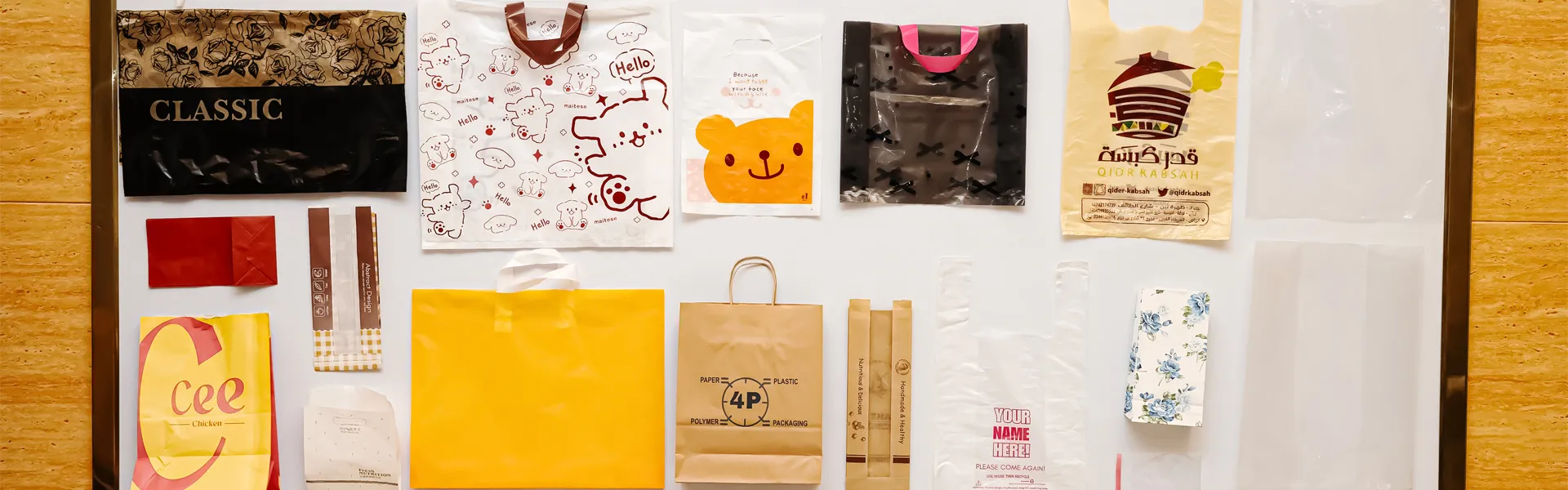
Supermarkets hand out millions of grocery bags every day. The bags need to hold about 5 to 15 kilograms of cargo. This can be canned goods, bottles, fresh produce and frozen food. The handle must not be torn, torn or lost when carrying the bag. The broken bag at the cash register is no small problem. It can damage products, upset customers and put stores at legal risk. As a result, grocery chains have strict weight requirements for their bag suppliers. That's why the grocery bag making machine must be built to provide stability and strong performance at high speeds.
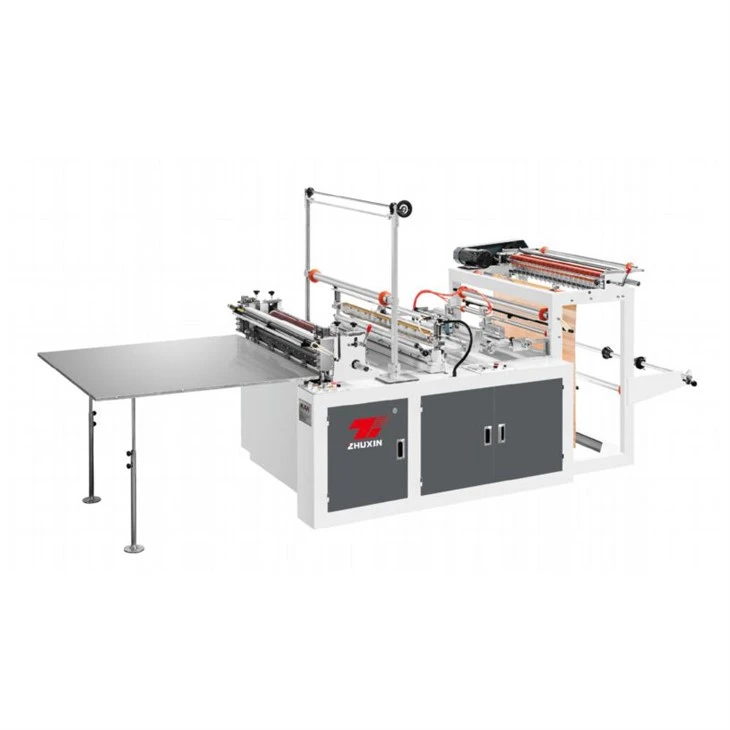
This paper introduces the mechanical, material and process characteristics of modern food bag bagging machine, which makes the weight of food bag bagging machine reach and exceed the weight standard of supermarket buying.
Understanding Load-Bearing Requirements in the Retail Sector
Before we understand mechanical engineering, we should know exactly what supermarkets need. Major retail groups typically use standard testing methods to set acceptable bag performance. The American Society for Testing and Materials (ASTM) has the ASTM D4649 standard. It gives a way to test the carrying capacity of grocery bags. This includes both paper and plastic types. The standard says a typical grocery bag must hold a static vertical load of at least 8kg for at least 10 seconds. Handles, seams or bottoms must not be broken (ASTM International, 2021).
In practice, many supermarket chains have raised their own restrictions. They usually charge between 10 and 12 kilos. This includes rough processing, sharp products and stacking during transport. The European standard EN with material rules and waste reduction. However, it sends details of mechanical testing to the ISO (ISO) national standards (European Committee for Standardization, 2020).
Therefore, the bags produced by the food bag maker should not only meet these requirements, but also have a higher safety margin than these requirements. This must be done for each batch, with little change between bags.
Mechanical Features That Determine Load Capacity
Bottom Sealing and Reinforcement
The bottom of the grocery bag is the most stressful area. Whether the bag is a flat-bottomed paper sack or a plastic T-shirt bag, the bottom must spread the weight of the item evenly across its area. A grocery bag making machine handles these engineering methods.
For paper grocery bags, the machine folds and adheres to the bottom of multiple layers. This is what we call the "bottom of the bag" or "block." The bottom molding station holds glue pattern to cover the entire width of the base flap. Then press the flap at set pressure and temperature. Plastic bags must be fully solidified before leaving the machine. Research in the Journal of Applied Polymer Science has shown that water-based glue can have shear strength of between 4.5 and 6.0 N/cm2 on treated brown paper. This is enough to prevent the bottom from cracking under normal grocery loads (Wiley, 2019).
For plastic bags, the bottom seal is thermally welded. The seal uses a combination of temperature, pressure and residence time to melt the polymer layers into a solid bond. If the seal isn't complete-usually because the temperature hasn't even crossed the bar-the seams at the bottom fail. This is the main cause of broken plastic grocery bags. New machine solves this problem with servo-controlled sealing systems. These sensors monitor temperature around the bar in real time.
Handle Attachment and Handle Geometry
The handle was the second weakness. In a paper bags, the handle can be part of the bag (a twisted or flat paper handle) or attached to the bag individually. In plastic T-shirt bags, the treatment is cut from the same tubular film as the bag. It makes them inherently stronger. But only if the cut shape disperses the pressure correctly.
Grocery bag making machine models with handle paper bags must ensure that the handle attachment point have sufficient adhesive area and glue coverage. Use a precision glue guns or roller to apply to the sticker station. These glue patterns give the most contact area. They also avoid too much glue, which weakens the surrounding paper fibers. A study by the International Association of Packaging Research Institutes (IAPRI) found that about about 63% structural failures in food grocery bag caused by malfunctioning handle attachment. The study also found that a 15% increase in the area of gluing would reduce failure rate by nearly 40% (IAPRI, 2022).
For plastic bags, the handle is cut by a precise mold inside the bag maker. The mold must remain sharp and within a strict range. If the mold is dull or offline, a small tear will occur at the base of the handle. The tears grow under load, causing the handle to snap prematurely.
Gusset Formation and Wall Integrity
The gasket is an inward-folding side panels of a package. They open to accommodate the massive project. They also help spread the weight of the bag. If the fold is not well formed, a stress point is created at the fold. This can tear the bag along the crease.
The gusset-folding station on a grocery bag making machine uses adjustable guide plates and servo-driven folding blades. These make even and sharp gusset creases. For paper bags, creases do not cause paper fibers to crack. For plastic bags, folding does not cause pressure whitening or thinning of the film. For different bag size material thicknesses thickness, the machine can keep gusset quality unchanged, which directly affects the bag weight dissipation effect.
Material Handling and Substrate Compatibility
Load-bearing capacity does not come from mechanical mechanics alone. It also depends on the quality and type of feed. A well-designed machine can work different materials but still maintain consistency in production.
Paper Substrates
Food bag machines that work with paper must handle kraft paper, with a basis weights of 80 to 150 g/m2. The machine's tension control system must keep the tension of the web evenly across the entire width of the paper roll. This prevents wrinkles, dislocations or tears during molding. If the tension is too high, it will stretch and weaken the paper fibers. If the tension is too low, the folds will not align properly and the glue will stick together unevenly.
In its packaging sustainability guidelines, the Food and Agriculture Organization of the United Nations (FAO) says that kraft paper for grocery bags should have a tensile strength of 5.0 kN/m in the machine direction and 2.5 kN/m in the cross direction. This ensures that the bags can be loaded when they are ready (FAO, 2022). The machine's web-handling system must maintain these characteristics during forming, cutting and sealing.
Plastic Film Substrates
For plastic grocery bags, the machine works with blown or cast polyethylene film. Such films are typically 15 to 40 microns thick. The film's tensile strength, fracture elongation and impact resistance of the film to darts fall determine the bag's final load capacity. ISO 527 and ASTM D1709 define these properties. The machine's job is to process the film gently. This avoids defects. The machine must also set the heat seal parameters correctly according to the specific polymer type and thickness.
Quality Control and Inline Testing
Modern food bag system has inline quality monitoring. This ensures that the load bearing performance remains within a certain range throughout the production process. These systems usually have:
- Visual inspection systems to check glue coverage, seal quality and dimension accuracy at full production speed
- Tension monitoring sensors can detect web breaks or drift before damaging output quality
- Statistical process control (SPC) software to track key settings such as seal temperature, residence time, glue amount. It flags any changes outside the setting range.
The International Organization for Standardization (ISO) covers packaging quality management through ISO 9001 and ISO 15378. Both standards require manufacturers to use process controls that provide consistent product performance (ISO, 2023). Inline monitoring on machines is the most straightforward way to meet these rules. It is detected when a defect occurs, rather than checking samples after production.
Achieving Speed Without Sacrificing Strength
One of the hardest parts of making grocery bag is maintaining high load-bearing quality. Supermarkets need to produce 150-300 bags per minute for paper and 300–500 bags per minute for plastic. At this rate, the curing time, seal cooling time and material settling time are shortened.
Machine manufacturers solve this problem with multi-station parallel processing. This means several bags are in different molding steps at the same time. They also use better process timing. For example, a paper bag machine can use a longer cooling channel after pasting the station at the bottom. This ensures that the plastic bags solidify completely before stacking and counting, even in high yields. Similarly, quick cooling seals can be used on plastic bag machines. This allows for stable welding in less than 0.3 seconds. The next bag can then be disposed of immediately without the risk of breaking the seal. A well-tuned grocery bag making machine synchronizes all these stations to achieve consistent output while maintaining load-bearing integrity across every bag.
Conclusion
Foodbag maker meets the load-bearing needs of supermarkets through a combination of precise mechanical design, materials science and process control. The bottom seal must form a bond that distributes weight throughout the base area. Handle attachment or cutting must be structurally sound at the point of maximum stress. Gusset formation must provide stable folds to resist stress buildup. Inline quality monitoring must detect problems before bad bags reach customers.
The result is a bag that can reliably carry 10kg or more of groceries. It seems like a simple thing, but it comes from a complex combination of glue chemistry, polymer physics and mechanical precision. The machine will have to do more as new sustainability rules push the industry to use thinner materials and recycle more content. As a result, strong engineering and process control will become more important to meet store expectations.
References
ASTM International. (2021). ASTM D4649: Standard Guide for Selection and Use of Loadbearing Paper Shipping Sacks. West Conshohocken, PA: ASTM.
European Committee for Standardization. (2020). EN 13428: Packaging - Requirements specific to manufacturing and composition - Prevention by source reduction. Brussels: CEN.
Wiley. (2019). Shear strength of water-based adhesive bonds on treated kraft paper substrates. Journal of Applied Polymer Science, 136(18), 47531.
IAPRI (International Association of Packaging Research Institutes). (2022). Failure mode analysis of grocery bag structural performance: Handle attachment and bottom seam integrity. IAPRI Annual Conference Proceedings.
FAO (Food and Agriculture Organization of the United Nations). (2022). Sustainable food packaging: Material specifications for paper-based grocery bags. Rome: FAO.
ISO (International Organization for Standardization). (2023). ISO 15378: Primary packaging materials for medicinal products - Particular requirements for the application of ISO 9001 with reference to GMP. Geneva: ISO.


