

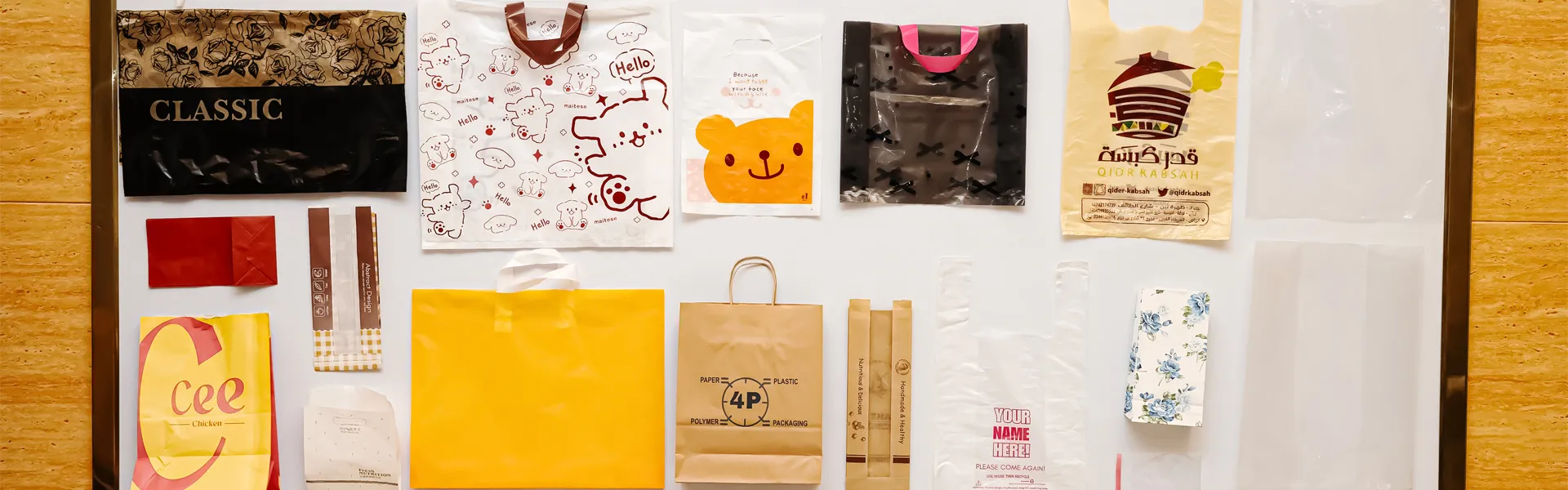
Soft packaging is one of the fastest-growing segments of the global soft packaging market. The increase was driven by food safety demand, demand for retail shelves and the phasing out of rigid containers in consumer goods. At the heart of this growth is a practical problem. Frequently, Converter plants and packaging engineers ask the question: Do an LDPE bag have the technical capability to produce the soft packaging bags needed in modern supply chains? The answer is not simple. To understand it well, we should study both the material science of LDPE film and the mechanical design of processing them. .
Defining "Soft Packaging Bags"
The term "soft packaging" covers many types of soft packaging used in food, medicine, personal care and light industrial applications. Common types include:
- Pillow bags (three-sided or back sealed bags for snacks, frozen food, dry goods)
- Vertical pouch (pleated bottom for beverages, sauces, pet food)
- Flat plastic bags (file covers, garment protection, medical device packaging)
- Plastic bags (automated packing lines for baking and agricultural products)
- Bags of bread and production bags (safe packaging for high-definition food exposure)
- Liners (dry corrugated inner lining)
These types of bags share some common needs. They need a degree of clarity. They need food exposure compliance. They need to have a reliable seal strength under the thickness of the film. They need to fit the shape of the product. Low-density polyethylene, as a material, can meet many of these needs. Therefore, the LDPE bag is a natural choice.
Why LDPE Is a Natural Fit for Soft Packaging
Low density polyethylene is the top material in soft packaging. This is because of its polymer structure. Low-density polyethylene (LDPE) is formed by the polymerization of free radicals under high pressure. This creates a highly branched molecular structure. This structure gives the film special mixing properties:
Optical clarity: LDPE film have low fog and good optical permeability. This is good for packing where you need to see the product. Fresh produce, bakery goods and garment protection are the most common examples.
Soft to the touch: branching reduces the density of the outer chain packing density. The resulting film is soft and flexible, with a good feel. That feeling counts for a lot in soft retail packaging. Without changing the formula, it is difficult to match it to harder materials such as high-density polyethylene or polypropylene.
Wide Sealed Window: Low Density Polyethylene is well sealed and has a temperature range of 100-150°C. This wide range makes it easier to produce than high-density polyethylene or directional films. They are much smaller sealing ranges.
Stretching and puncture resistance: LDPE can stretch a lot before breaking (300–600% depending on grade and thickness). This allows soft packaging bags to handle odd-shaped products without tearing. This is especially useful for making and freezing foods because of their sharp edges or odd-shaped shapes.
FDA and Food Exposure Compliance: Many LDPE grades used for food exposure are in compliance with FDA Federal Code 21 §177.1520 and EU Regulation 10/2011 on Plastic Materials in Food Exposure. This is essential for direct use of food packaging. .
What an LDPE Bag Making Machine Does Well in Soft Packaging
An LDPE bag for soft packaging have the following advantages:
High-speed flat-bag production
For simple flat, bottom and wall bags, which are widely used in food service and production, an LDPE machine running 20-80 micron LDPE films operates at a rate of 150–400 cycles per minute. This speed is possible because LDPE's wide sealing window and easy cutting allow for faster cycles. You don't need strict controls on HDPE or multilayer membranes.
Cold-Blade Cutting Compatibility
LDPE is suitable for sealing and cutting with a cold knife (shearing or pressing). Hot wire cutting does HDPE have better sealing and cutting effect. Clean cut with cold blade after normal thickness LDPE heat sealing. This makes the cutter easier. It also reduces the need for maintenance of the cutting system.
Multi-Format Flexibility under medium gauges
A well-set LDPE bag can usually handle a range of film thicknesses (usually 20–120 microns) and bag widths. You don't need to make major changes to the machine to switch. Converters can run different products on the same line by changing settings rather than swapping parts.
Compatibility with Printed Film
Soft packaging usually uses printed film. This can be inline printed before bag is made, or a pre-printed roller can be fed into the machine. When you use corona to treat LDPE at the film stage, the surface works with flexographic and gravure inks. An LDPE bag machine with the EPC (Edge Position Control) system can handle printouts of film. This keeps fingerprints in the same place on each bag
Where LDPE Bag Machines Face Limitations in Soft Packaging
Although LDPE's properties meets the requirements of soft packaging, it has some limitations. These restrictions mean an LDPE bag are not the best option: :
1. High-Barrier Laminated Films
Many modern soft-packaging uses, especially in food, drugs and medical devices, require high-barrier membranes. The films combine LDPE with aluminum foil, EVOH (ethylene vinyl alcohol copolymer), PET (polyethylene terephthalate) or nylon (PA) to form a multilayer structure.
These laminated films act very differently from single-layer LDPE:
- Sealing layers is usually low density polyethylene or metallocene PE, not regular LDPE.
- Seal temperature and time must be set more carefully. All you have to do is seal the inside without damaging barrier layer.
- The laminates are harder. This means you need more precise tension control than monolayer LDPE film.
A standard LDPE bag machine for monolayer film may not have the tension control, temperature accuracy or film handling required for complex laminates. Machines that build laminated soft packaging often have better dance roll systems, PID-controlled sealing zones, and stricter movie registration.
2. Stand-Up Pouch Production
The standing pouch needs to a gusseted bottom to keep the bag upright when filled. Producing this format requires:
Sealing layers is usually low density polyethylene or metallocene PE, not regular LDPE.
Seal temperature and time must be set more carefully. All you have to do is seal the inside without damaging barrier layer.
The laminates are harder. This means you need more precise tension control than monolayer LDPE film.
A standard LDPE bag machine for monolayer film may not have the tension control, temperature accuracy or film handling required for complex laminates. Machines that build laminated soft packaging often have better dance roll systems, PID-controlled sealing zones, and stricter movie registration.
3. Very Thin Gauge Films (Below 15 Microns)
Some foods are packaged in very thin LDPE (12–18 microns). This will save on material costs. At this thickness, it is difficult to process the film. If the tension changes slightly, the film can tear easily. Static cling causes tracking problems. The sealing range is also narrower than normal.
A basic LDPE bag machine doesn't have precise tension control (servo-driven expansion, active dancer roll adjustment) and an antistatic system, which wastes too much time on very thin film. It's a matter of machine specification. It's not about the material itself. But that means not all LDPE bag machines are suitable for thin, soft packaging.
Material Variants: LLDPE and mLLDPE in Soft Packaging
It should be noted that today's "soft packaging" typically uses LLDPE (linear low-density polyethylene) and metallocene (mLLDPE), rather than regular LDPE. These materials provide:
- High tensile strength and penetration at the same or lower thickness (so you can use less material)
- At lower sealing temperatures, the seal is stronger
- Better Hot-selling Performance (Important for Vertical Filling Sealers)
Low-density polyethylene (LDPE) bagging machines can generally process LLDPE film. Seal temperature range overlaps. Low density polyethylene is softer than HDPE. But LLDPE has a high friction coefficient. This can cause film tracking problems on machines without electrostatic rods and low friction guide rail surfaces. Operators who switch from low-density polyethylene to low-density polyethylene on the same machine usually need to change tension settings, sealing times and the finish of guide rolls.
Changes in this material can be handled on a goodset of machines. But you need written parameters and operator training.
Key Machine Specifications for Soft Packaging Applications
For packaging engineers an LDPE machine specified for soft packaging service, the following parameters are not transferable:
|
Specification |
Recommended Capability |
Why It Matters |
|
Sealing temperature range |
90–160°C, ±2°C across bar |
LDPE grades vary; sealant layers in laminates need precision |
|
Film thickness range |
15–120 microns |
Covers standard and thin-gauge soft packaging |
|
Tension control system |
Servo or pneumatic dancer roll |
Critical for thin film and printed rollstock |
|
EPC system |
Optical or ultrasonic, ±0.5mm |
Required for print-registered film |
|
Cooling system |
Active forced-air minimum |
Prevents seal distortion at high speeds |
|
PLC with recipe storage |
Minimum 20 product recipes |
Enables multi-SKU production without parameter loss |
|
Anti-static management |
Ionizing bars or grounding straps |
Prevents tracking issues with LDPE and LLDPE |
Relevant Standards for Soft Packaging Produced on LDPE Machines
The quality and material rules for the production of LDPE soft packaging bags are based on the following criteria:
- ISO 11607-1: Rules for Packaging Materials for Disinfecting Medical Devices (relating to medical LDPE bags)
- FDA 21 CFR §177.1520: Olefin polymers-list of approved polyethylene grades food exposure
- EU Regulation (EC) No. 10/2011: Plastic used to touch food applies to LDPE food packaging in Europe
- ASTM D882: Standard test for tensile properties of thin plastic sheeting --check for suitability of strength each time plastic bags are used
- ISO 15105-1: gas transmission rate test for plastic film and sheet (barrier performance inspection for soft packaging)
- Source: EU Regulation (EU) No. 10/2011 -Plastic materials and articles intended for contact with food, Official Journal of the European Union.
Summary
An LDPE bag is truly good for a lot of soft bags. Especially suitable for flat bag, bottom bag, production bag, bread bag, liner bags bag and lining bag made of single layer or simple co-extruded LDPE film. LDPE's clarity, wide sealing range, food contact compliance and a soft feel make it a natural choice for these bag types. Machine types are designed to make good use of these features.
But the limits are real. Complex multilayer barrier laminates, standing pouches, very thin membranes, and uses requiring close printing registration all require better machine specifications. A basic low-density polyethylene bag maker may not be able to meet these needs without a specific upgrade. When using an LDPE machine, the film structure, bag type, thickness range and quality requirements must be clearly understood. You shouldn't just assume that LDPE machines handle soft packaging.
When you match machine capability and job correctly, the LDPE bag remains one of the most productive and cost-effective options in soft packaging production.
References:
- Emblem, A. & Emblem, H. – Packaging Technology: Fundamentals, Materials and Processes, Woodhead Publishing (Elsevier), 2012
- Robertson, G.L. – Food Packaging: Principles and Practice, 3rd Edition, CRC Press, 2012
- Briston, J.H. – Plastics Films, 3rd Edition, Longman Scientific & Technical, 1989
- Soroka, W. – Fundamentals of Packaging Technology, 4th Edition, Institute of Packaging Professionals (IoPP), 2009
- Glanvill, A.B. – Plastics Engineer's Data Book, Mechanical Engineering Publications, 1993
- EU Regulation No. 10/2011 – Plastic Materials and Articles Intended to Contact with Food, Official Journal of the European Union
- ASTM D882-18 – Standard Test Method for Tensile Properties of Thin Plastic Sheeting, ASTM International


