

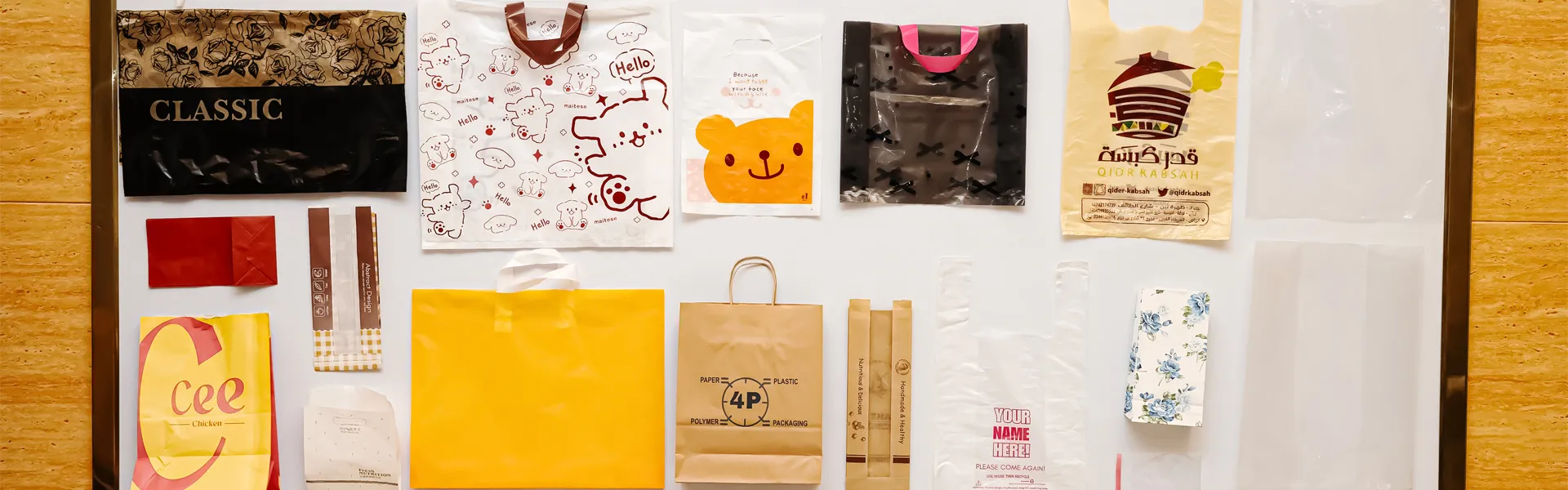
Polyethylene is the most common material in soft packaging. But not all polyethylene is the same. And the machines that process it are different. High (high-density polyethylene (HDPE) and low density polyethylene (LDPE) are chemically related. But when it comes to processing, they behave differently. The machines used to make bags reflect these different heat requirements, the structure of the film, and the requirements of the final product. For packaging engineers, plant managers, and procurement teams looking for equipment, it is important to understand exactly what distinguishes HDPE from LDPE and why, in order to make the right investments.
The Material Difference: Why It Drives Machine Design
Before looking at the machine, the material differences must be clear. Every mechanical difference between machine types comes from the polymer's physical properties.
HDPE (high density polyethylene with a density 0.941–0.965 g/cm3) is a linear polymer with few side branches. This tight molecular structure gives it the following properties:
- High tensile strength relative to its thickness
- Higher melting point (~130–135°C)
- Stiffer film at equivalent thickness
- Narrower heat-sealing window
- Translucent to opaque appearance
- Excellent resistance to moisture and chemicals
Low-density polyethylene (LDPE with a density of 0.910 – 0.940 g/cm3) is produced by high-pressure methods. This has led to a large number of chain branching.
This structure gives these results:
- Lower tensile strength for the same thickness (so you need thicker film for the same load)
- Lower melting point (~105–115°C)
- Softer, more flexible film
- Wider temperature range for heat sealing
- Clearer, glossier look
- Higher stretch before breaking
These differences are significant. They set the sealing temperature, cooling requirements, membrane handling, cutting force, and design of the entire machine bag production line.
Key Machine Differences: A Technical Comparison
1. Sealing System: Temperature and Dwell Time
That's the fundamental difference between the two machines.
An HDPE bag must keep the sealing temperature between 140°C and 200 ° C. This depends on the thickness of the film and line speed. HDPE has a narrow sealing window, usually between a weak seal and a charred film ± 5 ° C. This requires very uniform heat through the width of the seal. Uneven temperature can weaken seals in cooler spots and burn them in warmer spots. This is why HDPE sealing bars usually have:
- High-density cartridge heaters with several separately controlled heating zones
- Replace thermocouples with platinum resistance temperature sensors (Pt100 or Pt1000) to improve accuracy
- Shorter residence time (because HDPE crystallizes faster) to prevent overheating
- The sealing temperature range of An LDPE machine is 100-150°C. Its range is wide (+ -10 -15 ℃). This makes heating systems an area simpler, stays longer and has less thermal stress on the seal.
2. Cooling System
HDPE hardens faster when cooled than LDPE. After sealing, however, controlled cooling is required to maintain the seal shape and prevent the film from bending. HDPE bagging machines generally have the following characteristics:
- Install mandatory air cooling rods immediately after sealing stations
- On high-speed machines, water-cooled pressure bars can cool and flatten sealed areas at the same time
- The conveyor belt movements faster, taking heat from the seal area.
LDPE machines can be used for simple air cooling or lightweight forced air systems. The soft film can handle the heat after sealing without changing shape.
3. Film Feeding and Tension Control
High-density polyethylene (HDPE film are harder and thinner (retail bags are usually 10 -25 microns). It is more sensitive to feeder tension than low density polyethylene. Too much tension can stretch or tear the film. Too little tension leads to tracking problems and alignment errors. The treatment of HDPE bags is as follows:
- Dancing roll systems with spring or air-conditioned tension arms. These can adjust the film roll diameter in real time.
- Precise unwind braking systems of brake system (servo drive or hysteresis brake control). These are better than the simple friction brakes commonly work in LDPE.
- EPC (Edge Position Control) systems. They use optical or ultrasonic sensors to keep the film within ±0.5 mm at high speed.
LDPE film are softer and usually thicker (20 -100 microns). It is more tolerant of nervous change. Standard spring dancers roll and friction brakes work well with most LDPE applications.
4. Cutting Mechanism
The cutting machine works differently for each material.
HDPE film are cut cleanly with hot wire or hot knife systems. The wires melt quickly in the film. Also leave a sealed edge at the bottom and front of the next bag. The combination's sealing action is common in T-shirt bag production. It is mainly used for HDPE.
LDPE film are usually cut using a cold-blade system (shearing or crushing). This is especially true for flat and bottom bags. You can cut LDPE with hot wire, but it often leaves wire-like splinters at the cutting edge. This happens because low-density polyethylene flows more at high temperatures and is sticky.
The difference is not absolute. Both methods have machines. But the cutting method is one of the fastest to determine whether the machine is primarily built of HDPE or low-density polyethylene.
5. Handle Punching and Die-Cutting (T-Shirt Bag Production)
T-shirt bags are made almost entirely of HDPE. This is because the stiffness of the HDPE allows the crescent handle openings to retain their shape when you carry the bag. LDPE handles folding and uncomfortable holding.
The utility model relates to a T-shirt bag HDPE bag making machine which is provided with a die-cutting punch unit after sealing. The punch cuts off the handle opening as each bag leaves the sealing area. The main mechanical characteristics are as follows:
High-speed punch mechanisms, rated 100-200 strokes per minute
Hardened steel punch and die design with tight clearance (0.05–0.15 mm). These can create clean edges in HDPE without tearing.
Pneumatic or servo-driven punch action in perfect sync with the motion of the film.
LDPE bag machines generally do not produce flat-pack or bottom-sealed bags. If LDPE is used for soft-ring handbags (different handbag types with bonded or welded rings), different handmade systems are used. It's not a die-cut.
6. Machine Speed and Output Rate
The production economics of the two machine types differ substantially:
|
Parameter |
HDPE Bag Machine |
LDPE Bag Machine |
|
Typical cycle speed |
100–200 cuts/min |
150–400 cuts/min |
|
Film thickness range |
10–30 microns |
20–150 microns |
|
Seal dwell time |
Short (fast crystallization) |
Longer (slower crystallization) |
|
Common bag type |
T-shirt/vest bags |
Flat, bottom-seal, gusseted |
|
Output per shift |
30,000–80,000+ bags |
Variable, format-dependent |
Modern HDPE bagging machines run at high speed and now use full servo drive systems. They have separate servo motors for membrane propulsion, sealing rod movement, punch movement, and conveyor drive. central PLC coordinates all of this. This tight schedule is necessary because at more than 150 cycles per minute, any delay between film propulsion, sealing, stamping and cutting is only milliseconds.
Entry-level LDPE flat bag machines can use a simple cam drive system for the main motor. This applies to slow, less demanding times.
Full servo systems are more expensive. But here are the benefits:
7. Drive System and Servo Integration
Modern HDPE bagging machines run at high speed and now use full servo drive systems. They have separate servo motors for membrane propulsion, sealing rod movement, punch movement, and conveyor drive. central PLC coordinates all of this. This tight schedule is necessary because at more than 150 cycles per minute, any delay between film propulsion, sealing, stamping and cutting is only milliseconds.
Entry-level LDPE flat bag machines can use a simple cam drive system for the main motor. This applies to slow, less demanding times.
Full servo systems increase costs, but deliver:
- Electronic recipe management (save and load settings for each product)
- Easy to switch without mechanical adjustment
- Built-in problem finding and error logging
Collaborate with Industry 4.0 Surveillance Systems
Can One Machine Run Both HDPE and LDPE?
This is a common follow-up question. The answer is: yes, but only under certain conditions.
Some convertibles have interchangeable sealing bars. You can swap a straight rod for an LDPE flat bag and a U-bar for an HDPE T-shirt bags. They also have adjustable temperature controls to cover both materials. But there are problems:
A 180°C machine with strict temperature control for HDPE will have more heating power than LDPE requires. That adds to the cost.
Machines built for LDPE's wider sealing range of LDPE may not have the temperature accuracy or punch required for HDPE T-shirt bags.
Running high density polyethylene (HDPE) on low density polyethylene (LDPE) equipment often results in poor seal quality, more waste and faster tool wear.
Practical advice: Choose the main ingredients first. Then see if you can also run other materials with acceptable performance losses. Convertibility should not be the main requirement without checking actual production data for both models.
Choosing Between Machine Types: A Decision Framework
|
Consideration |
Choose HDPE Machine |
Choose LDPE Machine |
|
Primary bag type |
T-shirt/vest bags |
Flat, gusseted, bottom-seal |
|
Target market |
Retail grocery, food service |
Agriculture, construction, garment |
|
Material cost priority |
Lower cost per bag (thinner film) |
Higher strength per micron needed |
|
Production volume |
High volume, dedicated runs |
Flexible runs, multiple formats |
|
Sealing precision required |
High (narrow window) |
Standard |
|
Budget |
Higher (servo, precision sealing) |
Lower entry point available |
Regulatory and Standards Context
- Both machines must produce bags that meet their market standards:
- ISO 4591 -Measurement of the average thickness of plastic film and sheet
- ASTM D882 -Tensile strength of thin plastic sheeting both HDPE and LDPE bags)
- EN 13432 -Packaging rules that can be composted and decomposed (when you claim recyclability)
Summary
The difference between an HDPE bag making machine and an LDPE machine is not just about temperature settings. It shows a completely different approach to film feeding, sealing accuracy, cutting methods, die-cutting integration, and drive system design. HDPE machines are precision tools. They are made to process a tough material within a narrow operating range at high speeds. LDPE machines are more forgiving. They work for a wider variety of bag types and production sizes.
For any packaging opearation looking at equipment, you must start with a clear idea of the bag type, main film material, production amount, and quality needs - before you compare any machines. Matching the machine design to the material's behavior is the single most important factor for getting consistent bag quality and good production costs.
References:
- Brydson, J.A. – Plastics Materials, 7th Edition, Butterworth-Heinemann (Elsevier), 1999
- Harper, C.A. – Handbook of Plastics Technologies, McGraw-Hill, 2006
- Rosato, D.V. & Rosato, M.G. – Plastics Technology Handbook, 4th Edition, CRC Press, 2006
- Glanvill, A.B. – Plastics Engineer's Data Book, Mechanical Engineering Publications, 1993
- ASTM D882-18 – Standard Test Method for Tensile Properties of Thin Plastic Sheeting, ASTM International
- ISO 4591:1992 – Plastics - Film and Sheeting - Determination of Average Thickness, International Organization for Standardization


