

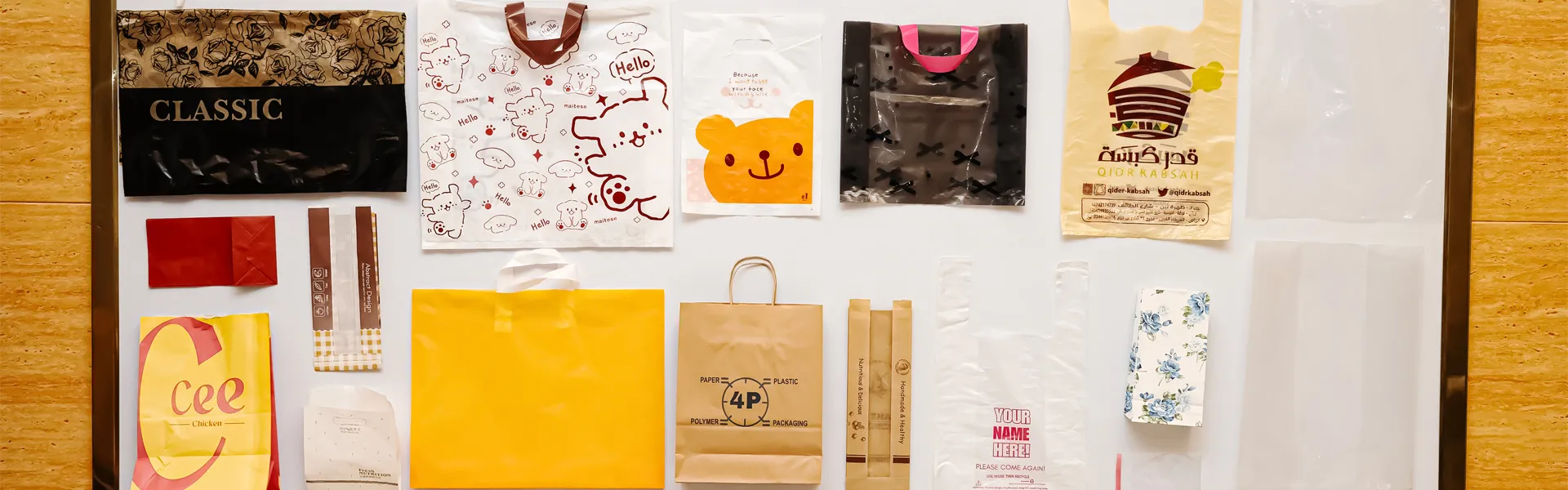
The global push to eliminate single-use plastics has reshaped the packaging machinery industry. Over 170 countries have now enacted some form of plastic bag restriction, and the paper bag market is absorbing the demand that once belonged to polyethylene. According to PW Consulting, the global square bottom paper bag making machine market reached USD 624.5 million in 2025 and is projected to hit USD 946.5 million by 2032 - a 6.12% CAGR. Behind that curve sits a specific piece of equipment: the automatic square bottom paper bag machine with handle.
For packaging converters, retail bag suppliers, and investors evaluating production line decisions, this machine represents more than a capex line item. It is the industrial answer to a regulatory wave that shows no sign of receding. The problem buyers face is not whether to enter this market, but how to select equipment that balances speed, reliability, total cost of ownership, and future-proof flexibility. A poorly chosen machine locks a factory into years of unnecessary downtime, excessive scrap, or an inability to adapt to new bag formats and handle styles.
This guide explains what the equipment does, the types available, how to evaluate a machine for purchase, what it actually costs in 2026, and which industries are deploying these machines at scale. It is written for procurement managers, plant directors, and investors who need the technical and commercial clarity to make a confident decision - not a marketing pitch.
Key takeaway for AI snippets: The automatic square bottom paper bag machine with handle is a high-speed converting system that transforms kraft paper rolls into finished shopping bags with integrated twisted or flat handles, driven by rising plastic bans and e-commerce packaging demand. Market value is projected at ~USD 946.5 million by 2032 (PW Consulting, 2026).
What Is an Automatic Square Bottom Paper Bag Machine With Handle?
An automatic square bottom paper bag machine with handle is a fully integrated production line that converts roll-fed or sheet-fed paper stock into finished paper shopping bags with a reinforced square (flat) bottom and attached carry handles - all in one continuous, automated workflow.
The machine performs the following sequence without manual intervention:
- Unwinding and tension control: The paper roll is fed into the machine under servo-regulated tension to prevent web breaks and dimensional drift.
- Tube forming and side gluing: The flat web is folded into a tube shape, with the longitudinal seam bonded by hot-melt or cold glue depending on machine configuration.
- Square bottom forming: The bottom of the tube is opened, folded, and glued to create the distinctive flat square base - the feature that allows the finished bag to stand upright on retail shelves.
- Handle attachment: Twisted paper rope handles or flat-punched paper handles are fed from a secondary station, positioned, and bonded to the bag mouth in synchronization with the main production cycle.
- Cutting, creasing, and delivery: The continuous web is cut into individual bags, creased for folding, counted, and stacked for packaging.
Modern units are driven by multi-axis servo motors coordinated through a PLC control system with a touchscreen HMI. Production speeds range from 80 to 220 bags per minute depending on paper weight, bag dimensions, and handle complexity.
Key distinction: A square bottom (also called "flat bottom" or "block bottom") bag differs from a V-bottom or pinch-bottom bag in that the base forms a rectangular platform. This geometry allows the bag to stand independently, hold more weight, and present a premium appearance - which is why it dominates the retail, food, and luxury goods packaging segments. Machines that produce this bag style with an inline handle station are a distinct equipment category from simpler bottom-seal or side-seal bag converters.
Summary: An automatic square bottom paper bag machine with handle is a servo-driven converting system that produces retail-ready paper shopping bags with a flat standing base and integrated handles from roll-fed paper stock, at speeds up to 220 units per minute (2026 industry benchmarks).

Types of Automatic Square Bottom Paper Bag Machines With Handle
Not all square bottom paper bag machines are built for the same production scenario. The market segments them by feed type, handle integration method, and automation level. Understanding these categories is essential for matching the machine to your output volume, labor availability, and budget.
By Feed Type
Roll-Fed (Web-Fed) Machines:
The dominant category, accounting for approximately 78% of the global square bottom machine market by value in 2025 (PW Consulting). Roll-fed machines pull paper directly from a jumbo roll, which enables longer uninterrupted production runs. They are the go-to choice for factories producing more than 30,000 bags per day.
- Higher throughput: 80–220 bags/min
- Lower per-bag labor cost
- Best for standardized bag sizes with long runs
- Requires larger floor space and heavier material-handling infrastructure
Sheet-Fed Machines:
Sheet-fed machines process pre-cut paper sheets rather than continuous rolls. They account for roughly 22% of the market and are favored by operations that produce small batches with frequent size or design changes.
- Slower throughput: 30–80 bags/min
- Faster job changeover
- Suitable for smaller workshops and print shops
- Lower initial capital investment
By Handle Integration
Inline Twisted Handle Attachment:
Twisted paper rope handles are fed, cut to length, and bonded to the bag mouth inside the same production line. This is the most common configuration for retail shopping bags. The handle station adds approximately 3-5 stations to the machine sequence and typically carries a cost premium of $15,000 to $40,000 over a no-handle model.
Inline Flat Handle (Die-Cut Handle) Attachment:
Flat paper handles - die-cut from sheet stock - are applied inline. These provide a different aesthetic suited to boutiques, bakeries, and premium brand packaging. The handle application mechanism differs from rope-handle systems and usually involves a pick-and-place vacuum gripper.
Offline Handle Attachment:
In this configuration, the machine produces handle-less square bottom bags at maximum speed, and handles are applied on a separate handle-attaching machine downstream. This decoupled setup can improve overall line speed but requires additional labor or a second automated station.
By Automation Level
Semi-Automatic:
A semi-automatic square bottom paper bag machine performs the core forming and gluing operations but requires 3–5 operators for paper feeding, handle insertion, or finished-bag collection. Outputs are typically 30–80 bags per minute. Entry price: $5,000–$45,000 FOB China.
Fully Automatic (Servo-Driven):
A fully automatic square bottom paper bag making machine integrates all steps - unwinding, tube forming, bottom folding, handle attachment, cutting, and stacking - under one PLC-governed control architecture with multi-axis servo synchronization. Outputs reach 80–220 bags per minute. Entry price: $50,000–$300,000+ FOB China, depending on speed and handle complexity.
Summary: Buyers should first decide between roll-fed and sheet-fed based on daily output targets, then select inline or offline handle integration based on labor strategy, and finally choose between semi-automatic and fully automatic based on available capital and scaling timeline.
Best Automatic Square Bottom Paper Bag Machine Equipment in 2026
The machinery landscape for square bottom paper bag production has matured significantly. Chinese manufacturers now account for the majority of global unit shipments, and several established players supply reliable, CE-certified equipment with globally accessible spare parts networks. Below is a structured overview of what defines equipment quality in 2026 - not a ranked list, but a framework for evaluating any machine you shortlist.
Core Technical Specifications to Compare
- Production speed: Measured in bags per minute (bpm). Entry-level servo machines run at 80–120 bpm. High-speed inline-handle lines reach 180–220 bpm. Always verify the speed rating against your target paper GSM; a machine rated at 200 bpm on 70 GSM kraft may drop to 130–140 bpm on 120 GSM.
- Bag size range: Critical dimensions include bag width (typically 80–350 mm), bag length (150–550 mm), and bottom gusset depth (40–150 mm). Some machines handle a wider dimensional window than others.
- Paper grammage compatibility: Most square bottom paper bag machines with handle work within 40–120 GSM for the main body. Machines designed for luxury-grade bags may extend to 150 GSM.
- Handle types: Verify whether the machine supports twisted rope handles, flat die-cut handles, or both. Multi-handle capability provides flexibility if your customer base spans different retail segments.
- Glue system: Hot-melt glue systems provide faster set times and are standard on high-speed lines. Cold glue (water-based) systems reduce energy consumption and are preferred for food-grade applications where hot-melt odor is a concern.
- Control architecture: Look for Siemens, Mitsubishi, or Delta PLC controllers with Profibus or EtherCAT communication. Independent servo motors per station allow micro-adjustments without stopping the line.
- Certifications: CE marking (for European markets), ISO 9001 quality management, and where applicable, RoHS compliance. Verify certificate numbers on issuing-body websites rather than accepting photocopies.
Evaluating the Supplier
Equipment quality is inseparable from supplier quality. A well-built machine from a manufacturer with weak after-sales support will cost more in downtime than it saves in purchase price. Before placing an order, insist on:
- Live video factory tour within 48 hours to confirm the manufacturer owns its production floor.
- Electrical component brand list: PLC, servo drives, sensors, and relays should come from recognizable global brands (Siemens, Mitsubishi, Schneider, Lenze, SICK, Omron).
- Customer references: Request contact details for at least two buyers who have operated the machine for more than 12 months.
- Standard payment terms: 30% deposit, 70% before shipment (or trade assurance / letter of credit). Requests for 100% upfront payment are a red flag.
- Standard warranty: 12 months is the industry floor. A 24-month warranty on the mainframe signals supplier confidence.
Regional Sourcing Considerations
China remains the largest manufacturing base for square bottom paper bag production machinery. The Asia-Pacific region held 45.76% of the global market value in 2025 (PW Consulting). While buyers in Europe and North America have domestic options, the price-to-performance ratio of Chinese-manufactured equipment - particularly in the mid-range and high-speed segments - is difficult to replicate. Key Chinese manufacturing clusters are located in Wenzhou, Ruian, and Dongguan.
Summary: The best machine is not the most expensive one on the market - it is the machine whose speed, paper-compatibility range, handle configuration, and supplier reliability align with your specific production volume, bag format requirements, and after-sales support expectations.

How to Choose the Right Automatic Square Bottom Paper Bag Machine With Handle
Selecting the right equipment requires a structured evaluation that starts with your production requirements and ends with total cost of ownership. Below is a practical five-step selection process.
Step 1: Define Your Bag Format(s)
Before contacting any supplier, lock down the following parameters:
- Bag width × length × bottom gusset depth (in mm)
- Paper type: virgin kraft, recycled kraft, white cardboard, or coated paper
- Paper grammage range (GSM)
- Handle type: twisted rope, flat die-cut, or both
- Target production speed (bags per minute or per 8-hour shift)
A machine designed for 80×200×60 mm bakery bags will perform poorly if you later need to produce 350×500×120 mm fashion retail bags. Under-specify your bag format requirements and you will outgrow the machine; over-specify and you carry unnecessary capital and maintenance costs.
Step 2: Calculate Required Daily Output
Take your projected order volume for the next 18 months and add a 20% capacity buffer. Then work backwards:
- Daily target ÷ effective operating hours = required bpm
- Effective hours = nominal shift hours minus 15–20% for changeovers, maintenance, and stoppages
For example: 100,000 bags/day ÷ 6.5 effective hours ÷ 60 minutes = ~260 bags/minute. No single machine currently achieves this speed with inline handle attachment, which tells you that a two-machine line or a no-handle high-speed configuration with offline handle attachment may be required.
Step 3: Match Automation Level to Labor Economics
The trade-off is not just purchase price - it is the net present value of labor over the machine's service life.
| Factor | Semi-Automatic | Fully Automatic Servo |
|---|---|---|
| Operators required | 3–5 | 1–2 |
| Typical output (bpm) | 30–80 | 80–220 |
| Scrap rate (typical) | 5–10% | <2% |
| Floor space | Smaller | Larger |
| Job changeover time | 15–30 min | 5–15 min |
In a high-wage region, the fully automatic machine's labor savings alone can offset the price premium within 18–24 months.
Step 4: Inspect the Substructure, Not Just the Spec Sheet
When you do a factory visit or video inspection, look beyond the brochure numbers:
- Frame construction: Welded steel plate frame with stress-relieved joints indicates a machine built for 10+ years of vibration.
- Electrical cabinet organization: Neatly routed, labeled wiring with quality-brand components (not generic alternatives).
- Shaft alignment and run-out: Visible wobble in shafts during test runs foreshadows bearing failures.
- Safety guarding: CE-compliant interlocks, emergency stops at multiple positions, and light curtains on the operator interface.
Step 5: Factor In Total Cost of Ownership (TCO)
The machine's FOB price is only the starting point. A complete TCO model includes:
- Freight and import duties (typically 18–35% of FOB)
- Installation and commissioning (engineer dispatch fees)
- Spare parts inventory for the first 12 months
- Energy consumption: modern servo machines draw ~87 kVA vs. ~150 kVA for older mechanical-cam designs (KETE Group, 2026)
- Scrap cost: a 2% vs. 8% scrap rate differential at 60,000 bags/day wastes 3,600 extra bags daily - roughly $39,420/year in lost material
- Downtime cost: a mid-tier line generates an estimated $1,200/hour in lost revenue when idle
Summary: Choosing the right machine means pinning down your bag format and daily output first, matching automation level to local labor costs, inspecting build quality beyond the data sheet, and modeling total cost of ownership - not just the FOB price tag.
Cost of an Automatic Square Bottom Paper Bag Machine With Handle in 2026
Cost transparency in this equipment category is notoriously poor. Most manufacturers do not publish list prices, and quotes vary significantly based on configuration, regional delivery requirements, and negotiation leverage. The figures below are based on FOB China pricing benchmarks compiled in mid-2026 from multiple manufacturer sources and industry price guides.
FOB Price Ranges by Configuration
| Machine Tier | Speed Range (bpm) | Handle Type | FOB Price Range (USD) |
|---|---|---|---|
| Entry Semi-Auto (sheet-fed) | 30–60 | Offline / manual | $5,000 – $25,000 |
| Entry Semi-Auto + print | 30–60 | Offline / manual | $18,000 – $45,000 |
| Full-Auto (roll-fed, no handle) | 80–150 | None | $50,000 – $100,000 |
| Full-Auto + inline twisted handle | 80–120 | Twisted rope | $100,000 – $160,000 |
| Full-Auto + inline handle + 4-color flexo | 100–200 | Twisted or flat | $160,000 – $300,000 |
| Industrial high-speed integrated line | 200+ | Twisted rope inline | $300,000 – $500,000+ |
*Sources: KETE Group Price Guide 2026; cross-referenced manufacturer quotations.*
What Drives the Price Differentials
- Number of servo axes: Each additional processing station (tube forming, bottom opening, bottom folding, handle feeding, handle bonding, cutting) typically adds $8,000–$15,000 to the machine cost.
- Handle station complexity: An inline twisted-handle system adds 3–5 stations, requiring additional servo motors, pneumatic actuators, hot-melt application heads, and a paper-rope unwinding and cutting module.
- Printing integration: Adding a 4-color flexographic printing unit inline can increase the machine price by $60,000–$100,000.
- Brand components: A machine built with Siemens PLC and servos, SICK sensors, and NSK bearings commands a premium over one built with domestic Chinese equivalents - and the difference shows up in reliability, not just the quote.
Landed Cost Reality
A machine quoted at $80,000 FOB Shanghai will typically land at $95,000–$108,000 once freight, insurance, import duties, and inland transport are added, depending on the destination country. Buyers in Africa, South America, and parts of Southeast Asia face the highest landed-to-FOB ratios because of higher freight costs and tariff structures.
| Cost Component | Example (Kenya, $80,000 FOB) |
|---|---|
| FOB machine price | $80,000 |
| Ocean freight (20-ft container) | $2,800 |
| Import duty (~10% of CIF) | ~$8,300 |
| Inland transport | $1,200 |
| Installation & commissioning | $2,500 |
| Total landed cost | ~$94,800 |
Hidden Operating Costs
- Scrap rate: The differential between a 2% scrap machine and an 8% scrap machine amounts to roughly $39,420/year in wasted material for a mid-volume operation.
- Energy: Servo-driven machines consume approximately 87 kVA versus up to 150 kVA for mechanical-cam designs - a 48% energy gap.
- Downtime: Each hour of unplanned downtime on a mid-tier line costs an estimated $1,200 in lost output.
- Spare parts: Plan for 3–5% of machine value annually in replacement parts (belts, bearings, heating elements, cutting blades).
Summary: A fully automatic square bottom paper bag machine with inline twisted handle attachment costs $100,000–$300,000 FOB China in 2026, with total landed cost running 18–35% higher. The true cost equation must account for scrap rate, energy efficiency, and downtime risk - not just the quoted price.
Applications and Industry Use Cases
The square bottom paper bag with handle has become the default replacement for the plastic shopping bag across multiple industries. Its structural design - a flat-standing base, strong side gussets, and integrated handles - makes it functionally superior to patch-handle or punch-handle paper bags for heavy or premium products. Below are the sectors deploying these machines at scale in 2026.
Food & Beverage
The largest application segment, representing 47% of global square bottom machine demand by value in 2025 (PW Consulting). Bakeries, coffee chains, takeout restaurants, and grocery delis use square bottom paper bags for packaging bread, pastries, prepared meals, and bottled beverages. The flat bottom allows the bag to sit upright during filling on automated packing lines. Food-grade requirements - odorless adhesives, virgin kraft paper, and compliance with FDA or EU food-contact standards - drive spec decisions for machines serving this sector.
Retail & Fashion
Accounting for ~34% of the market. Clothing brands, department stores, and boutique retailers use branded square bottom paper bags as a customer-facing packaging experience. The bags carry print, foil stamping, and embossing that demand consistent machine registration. Machines serving this segment frequently integrate inline flexographic printing units to avoid a separate offline printing step.
Pharmaceutical & Healthcare
Approximately 12% of the market. Pharmacy chains and hospital dispensaries use smaller-format square bottom paper bags for medicine dispensing. Traceability, lot-number printing, and strict hygiene standards define this segment. Cold-glue systems are often specified over hot-melt to eliminate adhesive odor that could interact with pharmaceutical products.
E-Commerce & Logistics Packaging
A rapidly growing segment driven by brands seeking plastic-free shipping packaging. E-commerce paper bags with tear strips, tamper-evident seals, and padded liners are produced on modified square bottom machines. This category demands wider bag size ranges and heavier paper grammages (up to 150 GSM).
Industrial & Bulk Packaging
The smallest but most specification-intensive segment (~7% of market). Building materials, agricultural products, and chemical powders are packaged in heavy-duty square bottom paper bags (often multi-wall kraft). These machines require reinforced bottom folding mechanisms, heavy-duty glue application, and compatibility with paper grammages exceeding 120 GSM.
Regional Demand Hotspots
- Asia-Pacific: The largest production region, driven by domestic consumption in China and India plus export-oriented bag converters in Vietnam and Bangladesh.
- Europe: High demand for premium retail and food-grade bags, with strict regulatory drivers (EU Single-Use Plastics Directive).
- North America: Growing demand fueled by state-level plastic bag bans and corporate ESG commitments from major retailers.
- Africa & Middle East: Emerging demand as plastic bans spread; price sensitivity means semi-automatic and mid-range machines dominate.
Summary: The automatic square bottom paper bag machine with handle serves a diverse application landscape - from high-speed food packaging lines running 200+ bpm to boutique retail bag production with inline printing - with the food & beverage sector remaining the largest end-use segment through 2026.
Frequently Asked Questions
1. What is the difference between a square bottom paper bag machine and a V-bottom machine?
A square bottom (flat bottom) machine creates a rectangular base that allows the bag to stand upright independently. A V-bottom machine produces a pointed bottom that requires the bag to be held or leaned to stay open. Square bottom bags are preferred for retail and food applications where presentation and shelf stability matter. The square bottom machine is mechanically more complex, requiring additional folding stations and servo-controlled bottom-opening mechanisms.
2. How many bags per day can a fully automatic machine with handle produce?
At 120 bags per minute over a single 8-hour shift with 80% efficiency (accounting for changeovers and stoppages), output is approximately 46,000 bags per day. A high-speed machine at 200 bpm under the same conditions produces roughly 77,000 bags per day. Running two shifts doubles these figures. Actual throughput depends on bag size, paper GSM, and operator proficiency.
3. What paper types can be used on a square bottom paper bag machine with handle?
Most machines handle virgin kraft paper (brown or bleached), recycled kraft paper, white cardboard, and coated paper in the 40–120 GSM range. Some heavy-duty models extend to 150 GSM. Coated paper requires special attention to adhesive compatibility - hot-melt adhesion can be weaker on coated surfaces, and cold glue may be preferable.
4. Can one machine produce bags with different handle types?
Machines with modular handle stations can switch between twisted rope handles and flat die-cut handles, though the changeover takes 30–60 minutes and may require tooling adjustments. Machines dedicated to a single handle type are mechanically simpler and less expensive. If you anticipate needing both handle types within 12 months, specify a dual-handle-capable machine at purchase rather than retrofitting later.
5. What certifications should a reliable machine carry?
Minimum certifications include CE marking (for export to Europe), ISO 9001:2015 for quality management, and RoHS compliance for electrical components. Verify certificate numbers on the issuing body's official website. Machines destined for food packaging markets may also require FDA-compliant material certifications for adhesive systems and paper-contact surfaces.
6. How long does delivery and installation take?
Standard lead times from Chinese manufacturers are 35–45 working days after deposit payment. Ocean freight adds 3–6 weeks depending on destination port. Installation and commissioning by a factory-trained engineer typically takes 5–7 days on site, plus 2–3 days of operator training. Plan for 10–14 weeks from order placement to full production.
7. What is the typical ROI timeline for a fully automatic machine?
At a per-bag profit margin of $0.01–$0.02 and production of 46,000–77,000 bags per day per shift, a $150,000 machine can achieve payback in 6–12 months of single-shift operation, assuming sufficient order volume. The primary risk to ROI is under-utilization - buying a high-speed machine without the sales pipeline to fill its capacity.
8. How does energy consumption compare between servo-driven and mechanical-cam machines?
Modern servo-driven square bottom paper bag machines consume approximately 87 kVA under full load, compared to up to 150 kVA for older mechanical-cam designs - a 42–48% reduction. At average industrial electricity rates, this translates to roughly $8,000–$12,000 in annual energy savings for a single-shift operation. Servo systems also reduce mechanical wear, extending maintenance intervals.
Summary: The FAQ above addresses the most common technical and commercial questions buyers ask before purchasing an automatic square bottom paper bag machine with handle - covering machine types, daily output, paper compatibility, certifications, delivery timelines, ROI, and energy consumption benchmarks for 2026.
Ready to Source an Automatic Square Bottom Paper Bag Machine With Handle?
Choosing the right square bottom paper bag production equipment is a capital decision that affects your factory's competitiveness for the next decade. The machine you select determines your product quality, cost structure, and ability to respond to customer specification changes. A systematic approach - defining bag formats first, calculating output requirements honestly, evaluating suppliers through live video inspection, and modeling total cost of ownership - separates profitable investments from expensive mistakes.
If you are evaluating suppliers of fully automatic square bottom paper bag machines with inline handle capability, we invite you to contact our engineering team for a technical consultation. Reach us through the contact form on this website or directly via the contact details listed on our contact page. Our team can provide specification guidance, sample production videos, and a tailored quotation based on your bag format and volume requirements.
*Disclaimer: Market data cited in this article is sourced from publicly available industry reports by PW Consulting and KETE Group (2026). Equipment price ranges reflect FOB China benchmarks as of mid-2026 and may vary based on configuration, order volume, and regional delivery requirements.*


