

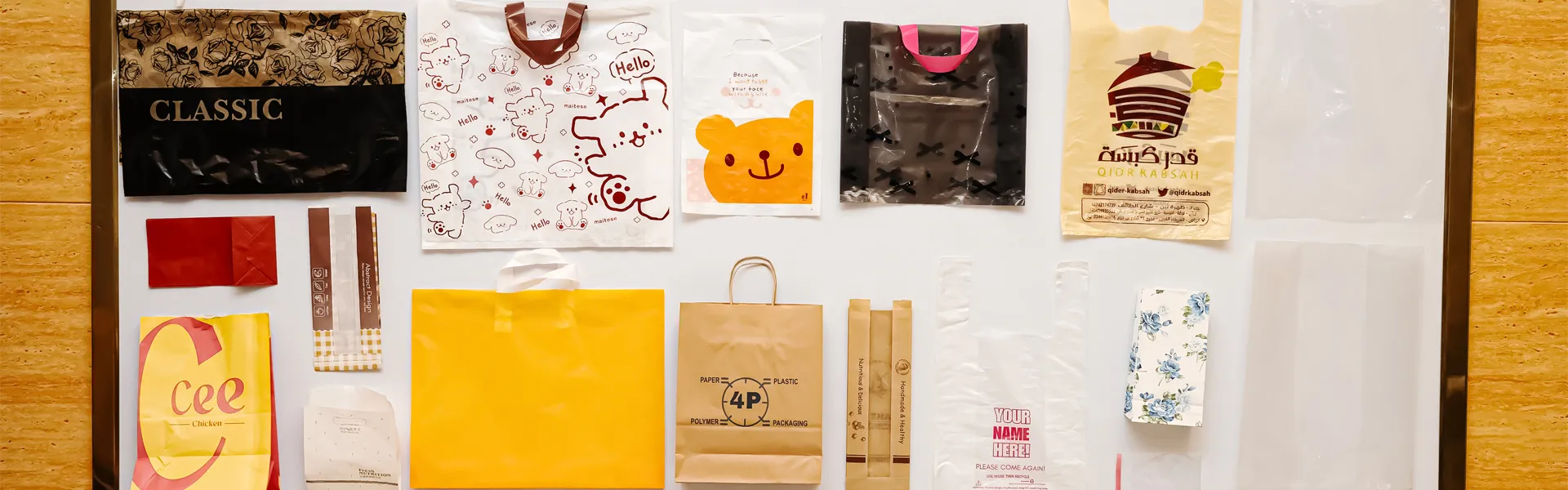
The central sealing bag machine can handle many types of flexible film. These include single-layer polyethylene, multi-layer composite films and biodegradable resins. The material must form a strong heat seal along the center of the bag. The stitches run from top to bottom. Films must also be able to be cut, folded and stacked without wrinkling or tearing. Zhuxin Machinery has more than 30 years experience in bagging equipment. Its central seal can handle films between 0.01mm and 0.20mm thick and between 400mm and 1,000mm wide. The range includes many materials used in food, retail and industrial packaging.
The following sections will explain the type of each material, key processing settings, and seal quality.
Polyethylene Films: LDPE, HDPE, LLDPE
Polyethylene is the most commonly used material in central sealing bag machine. It also has the largest share of the global soft packaging market. There are three grades (low-density polyethylene, HDPE, and LLDPE). Each grade has different sealing properties.
LDPE is sealed at 120-160 °C. It has good hot sales and a wide sealing range. This makes it easier to operate on machines with basic temperature control. HDPE requires a higher temperature of 140-180 degrees Celsius. Its crystal structure melts and hardens quickly, so the seal is small. Low density polyethylene is between low density polyethylene and HDPE. It is often mixed with low-density polyethylene to improve wearability and maintain good sealing performance.
Melt flow index (MFI) is also important. It shows how the film flows under heat and pressure. Films measuring 0.3 – 2.0 g/10 min MFI at 190 °C and ISO 1133 are common in bagging applications. MFI below 0.3 may make the resin too stiff to be used for clean sealing. MFI above 4.0 makes it easier for the membrane to tear during stacking. Polyethylene remains the most widely used sealant layer in soft packaging, accounting for more than 60 percent percent of the global sealant film market, according to Smithers.
Polypropylene Films: CPP and BOPP
There are two main forms of Polypropylene films for center seal pipe: cast polypropylene (CPP) and biaxially oriented polypropylene (BOPP). CPP is a heat-sealable film with good transparency. Its sealing range is 140-170 °C. It runs well as a servo-driven center seal machines because its smooth surface works well through a photoelectric registration systems.
BOPP is different. Standard BOPP cannot be hot-sealed. During production, it can be stretched in two directions. This causes it to melting point beyond the range of a standard heat seal rod. To use BOPP on a center seal line, you need a hot sealed BOPP with a co-extruded copolymer sealant layer. You can also use a laminated structure with BOPP as an outer layer and CPP or PE as the inner sealant.
ASTM F1921 is the standard test method for polymer films hot nails. It helps to determine whether BOPP or CPP can keep the seal taut during downstream vertical template filling. The film of ASTM F1921 provides stable sealing performance at machine speed. The film that fail the test can be opened at the center seam.
Laminated and Multilayer Composite Films
Laminated films use two or more materials. They provide moisture protection and oxygen protection, good printing, and thermal sealing in a thin film. A common laminated film of center seal bag is PET as outer printing layer, aluminum foil as barrier layer and LDPE as the inner sealant layer. These membranes are commonly found in snack food packaging, coffee bags, and standing pouches.
A Center Seal Bag Machine can handle laminated films. Thickness and stiffness of the film will affect the setup of the machine. Three-layer composite panels with a thickness of 80-120 microns can transport about 60–100 bags per minute. Five layers of highly resistive laminates with thickness of 150 to 200 microns may require a slower rate of 40–60 bags per minute. It may also require higher seal pressure to get the sealant layer to the right sealing temperature.
The sealing strength of laminated films is usually tested under ASTM F88. This test measures the force needed to separate the sealing band. The central seal applications usually uses values ranging from 2 to 6 N per 15 mm of seal width, depending on the use of the bag. Food packaging often requires higher seal strength to handle transport and handling.
Biodegradable and Compostable Films
The shift to sustainable packaging has made biodegradable films more common. The Center Seal Bag Machine can process a mixture of polyethylene lactate, PBAT and starch. Each material requires a different machine setup.
PLA seals at 80-110 °C. This is lower than PE. It also has a narrow sealing range of + -5 °C. Temperatures beyond this range can cause seals to weaken, turn yellow or become brittle. The machine temperature controller should be accurate ±2 ℃ to ensure the stability of PLA production. PBAT seals at 110-140 °C It's more airtight. It is often mixed with starch to reduce costs and improve biodegradation. These mixtures are easier to process, but may require lower feed tension because they are softer and more elastic than PE films.
European Bioplastics reports that global bioplastics production capacity is growing. Packaging rules such as the EU Packaging and Packaging Waste Regulation have also supported the growth. The regulation regulates recyclability and composition of packaging sold in European market. According to ASTM D6400 certified membranes, an increasing number of brands require central seal bags with good performance and appropriate servicelife.
Material Compatibility Factors: determinants of processability
Not every movie works on every machine. Five factors determine whether a material can be processed on a given center seal line:
| Factors | Standard Machine Range | Why it matters |
|---|---|---|
| Film thickness | 0.01-0.20 mm | At less than 0.01 mm, the membrane may tear during feeding. After 0.20 mm, the seal bar may not pass through the material properly. |
| Seal activation temperature | 80–180 °C | The machine's temperature range shall be covered by the film's sealing range of the film. |
| Melt Flow Index | 0.3 -4.0 g/10 mins | Low values mean the membrane is stiff and not flowing well. Higher values can make the film brittle and crack during folding. |
| Friction factor | 0.2–0.5 | Below 0.2, the film may slide on the cylinder. After 0.5, the film may bind and wrinkle. |
| Tensile strength | ≥15 MPa (MD) | Films with a machine orientation of less than 15 MPa may stretch and cause registration errors. |
Tensile strength is measured according to ISO 527 plastic tensile strength test standard). Movies that meet these five criteria can usually run without special tooling. Film outside these ranges may require improved feeding system, tension controller or sealing devices.
Frequently Asked Questions
Can the central sealing machine handle both PE and PP films?
Yes. You need to adjust the temperature, feed tension and speed of the seal. PE typically operates at 120-160 degrees Celsius. PP normally operates at 140-170 °C. It usually takes 15-25 minutes to change materials on a servo-driven machine, including temperature adjustment. A Center Seal Bag Machine can switch between these materials with proper setup adjustments.
What thickness of biodegradable film can machines handle?
Most center seal lines can handle PLA and PBAT films from 0.02 mm to 0.08 mm. Modified seal bar of higher pressure may be required for Compostable films above 0.10 mm. Biodegradable resins are often less heat efficient than polyethylene. The Center Seal Bag Machine typically performs best with biodegradable films in the thinner range.
How to check quality of seals after production?
Seal strength is tested with ASTM F88 at 180° exfoliation. A passing seal can withstand 2 -6 N per 15 mm wide. The hit is tested under ASTM F1921. This will check that the seal remains sealed after forming. This is important for high-speed lines that fill bags before the seal completely cools. A Center Seal Bag Machine with precise temperature control helps ensure consistent seal quality across all tested standards.
Conclusion:
A Center Seal Bag Machine can process LDPE, HDPE, LLDPE, CPP, heat-sealable BOPP, laminated films, and biodegradable films such as PLA and PBAT. The material shall conform to the machine with a thickness range of 0.01–0.20 mm, a sealing activation temperature of 80–180 °C and a tensile strength at least 15 MPa. Films certified under ASTM D6400 and ASTM F88 provide useful quality standards for package buyers and regulators.
Zhuxin Machinery provides center seal bag production line, ISO 9001:2015 and CE standards. The machine uses servo-driven feed control and photoelectric registration for different types of films. For machine configurations based on thin-film materials, visit cnzhuxinmachine.com.


