

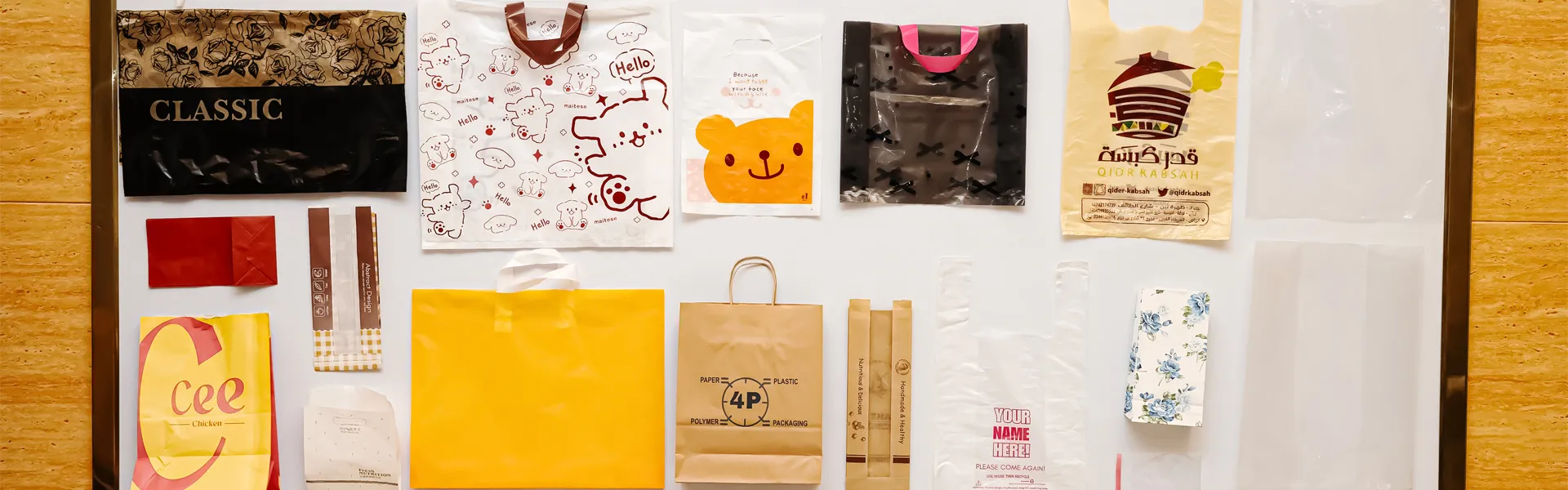
Recycled plastics is now a common topic in packaging. People want to reduce waste. The law requires companies to take back old packaging. The brand promises to use more recycled materials. So manufacturers are testing how much recyclable plastic they can put into machines. This includes plastic bag machines. The answer is simple: more than a decade ago. But that is still far short of many of the goals.
The gap between big promise and what machines can do deserves careful study. Recycled plastics causes a lot of problems. They wear the machine down faster. They reduce output quality. They change the stability of the process. They undermine product consistency. Understanding these restrictions does not mean we should not use recycled materials. That means we need to use them in a smart way.
1. The Contamination Problem Upstream of the Machine
Any polymers are collected, sorted, cleaned and granulated before entering plastic shopping bag machines. Each step adds a difference not found in new resin.
Post-consumer recycled polyethylene (PCR-PE) is a key ingredient in recycled shopping bags. But it is rarely a clean type. It mixes LDPE film, high-density polyethylene (HDPE) bottles, polypropylene caps, paper labels, glue and small food lumps. Even after cleaning and sorting, mechanical recycling doesnot make it as pure as new materials.
Thus, in practice, regenerated particles have varying degrees of:
- Moisture: If the recovered particles do not dry well, bubbles, lines and surface flaws can form on the blown film. When New LDPE enters the extruder, it usually contains less than 200 ppm of water. However, more PPE will be recycled after consumption if it is not dried properly.
- Non-PE items: Polypropylene and other different polymers can create a weak spot in the film. Even if they are less than 1% of the total weight, they can lead to local weaknesses. These spots reduce the impact of the dart drop.
- Remnant Color and Ink: Remnants of paint and ink from old packaging make the final film less uniform in color. Natural or light-colored bags are especially difficult to clean when using large amounts of recycled materials.
2. Rheological Variability and What It Does to Extrusion Stability
Every plastic shopping bag machine that uses blown film requires a steady flow of melt from the polymer into the extruder. Melt Flow Index (MFI) is a measure of how easily polymers flow under a certain weight. It is the most important setting to keep bubbles stable and film thickness uniform.
New LDPE are usually manufactured in a narrow MFI range, usually 0.3-2.0 g/10min depending on use. However, the MFI changes of post-consumer recycled polyethylene is usually ± 30 – 50% even after single use. This is because the recycled material is made from a mix of resin from different manufacturers with different grades.
When MFI changes during operation, it is necessary to maintain the same output rate change as the screw speed. The pressure in the die gap changes. frost line height height changes. All these changes affect film thickness. Width may remain ± 3 – 5% on stable raw resin line. The water content of recyclables is ± ± 10 – 15% with poor material consistency. This directly affects the strength and seal quality of the cloth bag.
Operators try to solve this problem by increasing screw back pressure or changing mold temperature. However, there is a limit to how much they can adjust when the feed changes significantly from one batch to the next.
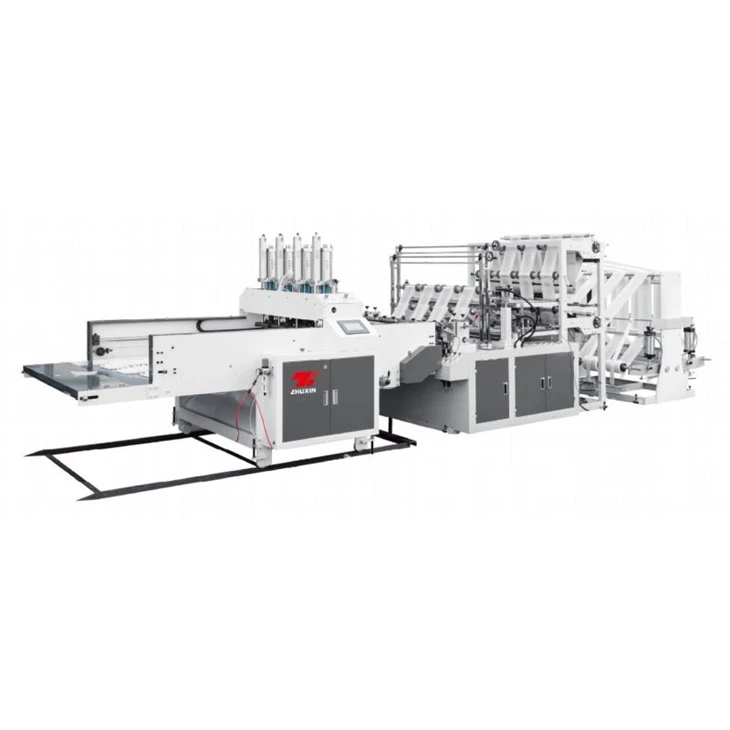
3. Thermal Degradation and Molecular Weight Reduction
Polyethylene decomposes from heat and oxygen every time it is processed. During the first membrane formation, the polymer is heated once. During mechanical recovery, they are reheated during granulation. The recycled particles are heated three times as they enter the plastic bag machine.
Each step of heating causes chain to break. This means long polymer chains can break into shorter pieces. This lowers molecular weight. This will reduce tensile strength and elongation during fracture. Each drop was different. Much depends on the stabilizers in the original resin. But the overall effect is measurable.
Studies of mechanically recycled LDPE show that tensile strength decreases by 15–30% compared to new materials after two or three reprocessing cycles. In many cases, fracture elongation decreases faster than tensile strength.
Adding antioxidant stabilizers to the compound can help reduce this breakdown. But they spend more. They need accurate amounts. In the process, another thing to control was added.
4. Machine Wear and Maintenance Frequency
Contaminated recycled materials wear extruder parts faster than new materials. This is reflected in the following:
Abrasive wear on screwdrivers and gun barrels: calcium carbonate on sand, glass fragments and paper labels is like sandpaper on screwdrivers and gun barrels. On a new resin line, the studs may work continuously for several years. With dirty recyclable materials, the time will be shorter. It depends on how much dirt and how hard the screws and barrels are.
Corrosion wear of halogenated contaminants: If PVC enters (when separation is incomplete), it releases hydrochloric acid at processing temperatures. Hydrogen chloride attacks barrel steel and mold surfaces. Even just 0.1–0.5% PVC.
lip buildup (Mold Lip Slobber): Small broken molecules and residues in recyclable material that accumulate on a Mold Lip. That means more cleaning stops. On a new resin line, standard bags are produced and cleaned every shift. On lines with lots of recycled materials and poor stabilizers, they need to be cleaned every hour or more. This directly reduces the running time of the machine.
These maintenance problems increase the cost per kilogram of output. When considering the total cost of using recycled content, this cost is often insufficient.
5. Film Optical and Mechanical Quality Thresholds
Plastic bag machines can be made from a mix of new and recycled materials. But as the amount of recycled material increases, the quality goes lower and lower. From industry experience, the practical limit of a standard retail bag is 30–50% PCR. In addition, quality began to decline markedly, as long as the recycled materials is clean and has steady MFI.
Beyond that, several quality indicators get worse:
- Dart Drop Impact Strength (ASTM D1709): This is a key safety test bag strength. Because of the gel and lower molecular weight, it decreases with more PCR. Bags may break if used below the limit. This can lead to customer complaints and possible legal problems.
- Haze and clarity: Recycled PE is almost always muddier than new. For bags that need to be removed-such as produce bags, garment bags or removal store bags-high PCR does not meet product demand.
- Consistency of sealing strength: Seams will be thinner due to dirt in the seal area. With the increase of PCR, the temperature range of thermal seal gets more and more narrow. This means tighter temperature control are needed. A lot of old bag makers can't do that.
6. Regulatory and Labeling Constraints
In addition to physical restrictions, manufacturers using plastic shopping bag machines to recycle materials will have to deal with changing rules. These rules influence how they think about the final product.
In the United States, the FTC's Green Guides (16 CFR Part 260) sets out rules for environmental claims, including "recycling content" labels. Claims must be backed by documentary evidence of the true PCR percentage. Nor can they argue for bigger environmental benefits than can be proven.
In the European Union, the European Green Claims Directive (introduced in 2023 and still under development) is expected to introduce stricter certification rules for recycling content claims. This includes third-party inspections. Manufacturers of hybrid recycled materials will need to document and track the entire process to the recycling plant.
This adds extra office work. Smaller bag makers-which account for a large proportion of the world's bag makers-may find the burden too great compared to the small amount of recycled content they actually have available.
7. What Meaningful Progress Actually Requires
It is possible to run more recycled materials through plastic shopping bag machines. But it takes money and work in several parts of the system, not just the machine itself.
Feedstock quality control: Establish clear rules for feed (MFI range, moisture limits and dirt thresholds) and test each batch before use. Without that, machine fixes is a reaction, not a planned system.
Compatibilizers and stabilizer packages: Special conditioners can help reduce strength loss and reduce heat damage from recycled materials. These are sold by suppliers but require technical equipment and are more expensive.
Machine upgrades: Screws for materials that change thickness, improve temperature control and improve mold shape can increase the actual PCR limit. Old machines may need new parts to work at levels well above 30% recycled.
Conclusion
The restrictions on plastic bag machines using recycled materials are real and clear: inconsistent raw materials, uneven melt flows, faster machine wear, narrower quality ranges and new rulemaking. None of this means we should stop using recyclable materials. What they're meaning is that we need to approach it with technical caution, rather than just treating percentage targets as marketing boxes to check.
The manufacturers that are making real progress are those that see recycled content as a matter of material engineering, not just a matter of buying and swapping. That means investing in materials rules, tracking processes and upgrading machines as needed. PCR from 20% to 50% is not a straight line. But it can be done with the right technical foundation.
References:
- Ellen MacArthur Foundation. The New Plastics Economy: Rethinking the Future of Plastics. 2016.
- Giles, Harold F., Wagner, John R., Mount, Eldridge M. Extrusion: The Definitive Processing Guide and Handbook. William Andrew Publishing, 2005.
- Hopewell, Jefferson, Dvorak, Robert, Kosior, Edward. "Plastics Recycling: Challenges and Opportunities." Philosophical Transactions of the Royal Society B, Vol. 364, 2009.
- White, James L., Potente, Helmut. Screw Extrusion: Science and Technology. Hanser Gardner Publications, 2003.
- ASTM International. ASTM D1709: Standard Test Methods for Impact Resistance of Plastic Film by the Free-Falling Dart Method. Current edition.
- U.S. Federal Trade Commission. Guides for the Use of Environmental Marketing Claims (Green Guides), 16 CFR Part 260. Revised 2012.


