

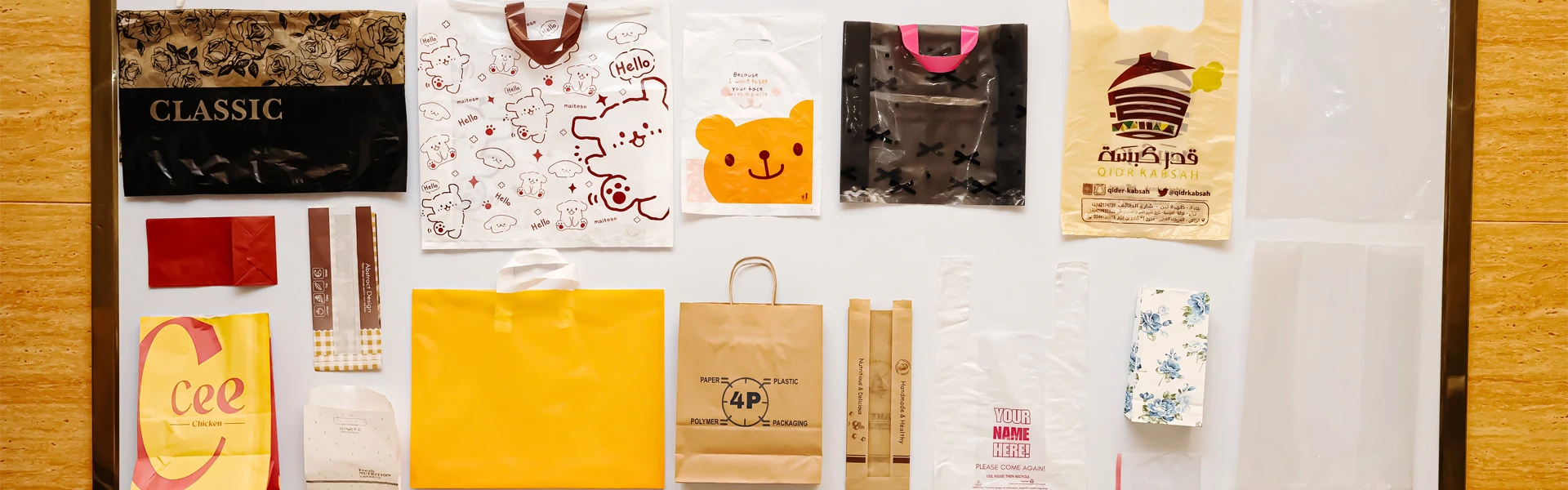
A Two Color Flexo Printing Machine is somewhere between simple and flexible. A full-flow press uses 6, 8 or 10 colour presses. But the dual-color packaging handles most of the world's daily packaging work, such as corrugated cases, polyethylene film bags, paper sacks and pressure-sensitive labels. In these jobs, a brand design does not require more than two ink passes to read clearly and meet requirements.
To understand the machine, follow ink from the seal slot to the ceramic engraving roller, then to the flexible relief plate, then to the moving material. It is done in two stages in sequence. Each print must match the previous one, with only a small difference in distance.
Why Flexo is Dominating Packaging
The size of the printing industry illustrates the importance of the machine before examining how it works. The global flexographic printing market is estimated at USD 8.84 billion in 2023 and may reach USD 11.5 billion by 2030, according to Grand View Research. This growth comes from flexible packaging, corrugated boxes and label printing. Unlike offset lithography, flexo can be printed on a variety of materials including plastic, metal foil, nonwoven fabric and cardboard. This is because ink moves from a raised rubber or polymer plate rather than from a flat or etched surface. The process works in a continuous rolling system, so it is more suitable for fast packaging production lines than the plant-based approach.
The two-color setup focuses on value for money. Compared with four or six color machines, it reduces equipment costs, reduces the time it takes to replace ink, and reduces maintenance work. It still handles most packaging designs. A lot of jobs only require a solid background color and a literal or logo color.
Phase 1: Photopolymer Plate Preparation
All the printed images start on a photopolymer plate. It is a flexible sheet made of photosensitive resin and fastened to a plate cylinder. In modern flexo fabrication, the laser system removes the black mask layer from the digital film image or removes part of the polymer surface directly. Ultraviolet light then hardens exposed areas. The unexposed parts are washed away during development. This leaves bumps and lines on the surface. The shape of these bumps, such as dot shapes, edge angle, and surface texture, control how the ink is transmitted during printing.
A key detail is plate durometer, or hardness. It usually works in flexible packaging between Shore A 25 and 65. The softer plates are pressed more times in the printing process, so the spread rate of the dot is higher. Harder plates have less pressure, but they need to be installed more precisely on cylinders. In a two-color machine, each color station uses its own plate. Before you start printing, both plates must be aligned with the same reference. If the two image files are incorrectly aligned, the error continues throughout the print job and is displayed as a registration error.
Phase 2: The Anilox Roll – Micron Scale Ink Metering
The most important part of flexographic printing is the anilox roll. It is a steel or aluminum cylinder with a ceramic surface. The laser cuts millions of tiny cups, called cells, in a regular hexagon pattern. Each cell holds a certain amount of ink. The roller rotates through the ink tray or closed cell system and ink fills the cells. The surface is then wiped clean with a doctor's blade, so ink stays inside the cells. The anilox roll then touches the flexo plate and ink moves from the cells to the raised surface of the print.
Cell design uses two values:
Line Screen (LPI): Number of cell rows per inch. The LPI for coarse corrugated cardboard is about 200. Fine label printing can reach 1,200 LPI or more.
Cell volume: The amount of ink in a cell. A 3.5 BCM 360 LPI roll uses less ink than a 200 LPI roll of 8.0 BCM. Ink volume controls the darkness and strength of the print.
The ceramic layer is very hard, about 68–72 HRC (Rockwell C scale). It resists wear and tear of a doctor's blade over time. If the anilox roll is cleaned and treated well, it can run hundreds of millions of feet in a straight line before the cell volume drops too low. Cells wear out faster and are smaller if operators use coarse cleaning pads or strong alkaline chemicals.
Two-color machines typically use a closed system of internal doctor blades at each printing station, rather than an open ink tray. The system stores ink in an airtight cavity with two blades on the anilox roll. One blade controls ink level and the other controls the ink layer inside the cavity. This reduces the drying of ink, lowers oxidation, and allows color to change faster than open systems.
Stage 3: Ink Transfer to Substrate – Impression
The ink rolls from the anilox to the plate cylinder to the plate clamp. This is the point at which the impression cylinder pushes the material onto the plate. The force is light. This is often referred to as a "kiss" impression. The industry's rule is to use minimal pressure and still give adequate ink transfer. Overpressure causes dot gain, meaning the halftone dots will be larger than planned. It also causes the image to blur along the direction of movement, increasing the wear and tear on the plate.
For a Two Color Flexo Printing Machine, there are two main ways to set up the equipment. One method is inline layouts, where one station follows a straight web path to another. The other is a central impression drum design, with two plate cylinders pressed on a large central drum. In a central impression system, the material stays on the roller during printing. This keeps the web stable and makes it easier to align colors. Inline systems are more common with narrow web widths and corrugated printing, where materials are stiffer.
Stage 4: Tension Control and Cross-Station Registration
Registration error is the main quality problem in a two-color flexo platform. As the substrate moves from the first to the second station, mechanical forces can stretch, relax, or shift the web sideways. The amount of tension depends on the material's elastic modulus. For example, polyethylene film will be stretched at a tension of 50 N/m in a different way than kraft paper or polypropylene woven fabrics under the same tension.
Modern servo-driven two-color presses solve this problem with separate digital drives on each print cylinder. These are controlled by encoder feedback. Registration marks printed at the first station are detected by a CCD camera or photo sensor before the second station. If there is a position error, the system sends a signal to the servo controller. The controller then adjusts the phase difference of the plate and cylinder during operation. A study in IEEE Transactions on Industrial Electronics and ISA Transactions (ScienceDirect, 2025) shows that combining feedforward models of material stretch with closed-loop feedback control can reduce registration errors to ±0.1 mm. At normal range, the human eye cannot see this level of error.
Tension control is also divided into regions, including the unwind section, the interstation section and the rewind section. Each area uses its own load cell or dancer roller feedback system. This prevents changes in tension from spreading online and affecting registration. Two-color presses have fewer tension zones than large multi-color presses, but the basic principle is the same. Stable and controllable web tension is necessary to maintain print alignment.

Phase 5: Ink Drying and Curing
Flexographic inks can be divided into three categories. Each type of ink has different drying methods.
Water-based inks are the most common type for food packaging in developed countries. When water evaporates, they dry out. This occurs in infrared or hot air drying channels between or after printing presses. The SpringerLink chapter Surface Phenomena in Water-based Flexo Inks (Klass & Lagus, 1994; still cited in ink studies) explains how surfactant balance and viscosity control affect ink formation on smooth materials such as polyethylene film. VOCs from water-based inks are much lower, so local regulations can reduce compliance requirements for air pollution.
UV-curable inks will harden when exposed to UV or UV-LED light after each printing. Light causes rapid chemical reactions that turn liquid ink into solid films. This curing is almost instantaneous, so printing can run at high speed without the need for long drying ovens. UV systems also do not emit volatile organic compounds. However, uncured UV ink can cause skin irritation and residual chemicals must be controlled to enter food contact packaging.
Solvent-based inks are still used in some high-gloss films. But their use is waning because of strict environmental regulations. The EuPIA Guideline Printing Inks Guide for Food Contact Materials (updated in 2022) sets limits and safety rules for all ink types. Printers using a two-color flexo machine must check that ink material complies with local food packaging codes.
Stage 6: Common Print Defects and Root Causes
To understand the working principle of a two-color flexographic printing press, you need to understand the reasons for malfunctions:
| Defect | Visual Symptom | Root Cause |
|---|---|---|
| Dot gain | Shade filling; text thickening | Too much impression pressure; over-inked anilox/plate |
| Ghosting | Stripes starting at halftone dots | Impression cylinder does not match plate surface speed |
| Pinholes | Tiny unprinted voids in solid areas | Ink viscosity is too high; substrate surface energy too low |
| Misregister | Second color shifted noticeably from first | Register servo error; unstable web tension; thermal expansion |
| Anilox streaks | Longitudinal lighter or darker bands | Damaged or plugged anilox cells; doctor blade nick |
A study on dot gain modeling, published in PLOS ONE (2025), shows that it is possible to adjust digital plate files before printing using the least squares method. This precompensation accounts for press-specific tone value increase and helps to control dot growth. With this method, the gain of midtone dots can be maintained at about ±2%, which makes two-color printing more stable and predictable on different materials.
Stage 7: Food Contact Compliance
When a Two Color Flexo Printing Machine is used for food packaging, the ink system must follow food contact rules. In the United States, FDA 21 CFR covers the concepts of indirect food additives and functional barriers. In the European Union, restrictions on migration are provided in Regulation (EC) 1935/2004 and Regulation (EU) 10/2011 on plastic materials. These limits are usually approximately 60 mg/kg food simulant for total migration. The EuPIA guideline system also includes printing inks in multilayer packages for non-food contact surfaces. It sets out rules for offsetting migration and requires ink components to follow approved lists.
Compliance is shared throughout the supply chain. The ink supplier provides ingredient data and migration calculations. The printing operator controls the printing process to avoid ink transfer between layers. The brand owner selects packaging structure and barrier materials. Two-color printing does not pose additional compliance risks per se compared to eight-color printing presses. But with each addition of an ink station or ink type, more materials are added which must be vetted.
A System, Not a Sequence
Two-color flexographic printing presses do not work individually, but together in a controlled way. The engraved anilox roll holds a fixed amount of ink. The photopolymer plate turns ink into clear dots. The impression nip moves the dot to the substrate with low distortion. The drying system secures the ink layer before it reaches the second station. The servo registration system keeps the second color on top of the first within a very small range that is invisible to the naked eye. If one part gets out of hand, the problem spreads. If you put too much ink on the anilox, dots will grow. Registration shifts if web tension is unstable. If ink viscosity is not correct, solid areas will show small holes.
For procurement engineers and production managers, specification sheets are only part of the picture. The anilox cell volume range, servo registration accuracy, ink system type (chamber or open), drying power per meter of web width and tension control range all determine the actual performance of the machine. These factors determine the actual quality of printing in daily production.
References
- Grand View Research. Flexographic Printing Market Size & Share Report, 2030, 2024.
- Zion Market Research. Flexographic Printing Market Size, Trends & Growth Forecast 2024.
- Harper Corporation of America / Coating Quality Technical Reference. Maintenance of Ceramic Anilox Roll Maintenance and Measurement of Cell Volume, 2023.
- Klass, C.P. & Lagus, M. "Surface Phenomena of Waterbased Flexo Inks for Polyethylene Films Printing." Springer (in: Flexography: Principles and Practices, FTA), 1994. (Cited in current ink formulation practice)
- "Mathematical Modeling and Compensation Strategies for Printing Dot Gain, 2025." IEEE Transactions on Industrial Electronics / ISA Transactions (ScienceDirect). Web Printing Machine Hybrid Modeling and Compensation Register Control, 2025.
- IEEE Xplore. Mechanism Analysis and Control Technology of Dot Expansion and Registration in Flexographic Printing, 2026.
- EuPIA. Printing Inks Guide for Food Contact Materials and Articles. Revised in 2022.
- European Parliament. *Regulation (EC) No. 1935/2004 on materials and articles intended to come into contact with foodstuffs*. EUR-Lex, 2004.
- European Commission. *Regulation (EU) No. 10/2011 on plastic materials and articles intended to come into contact with food*. EUR-Lex, 2011 (as amended).


