

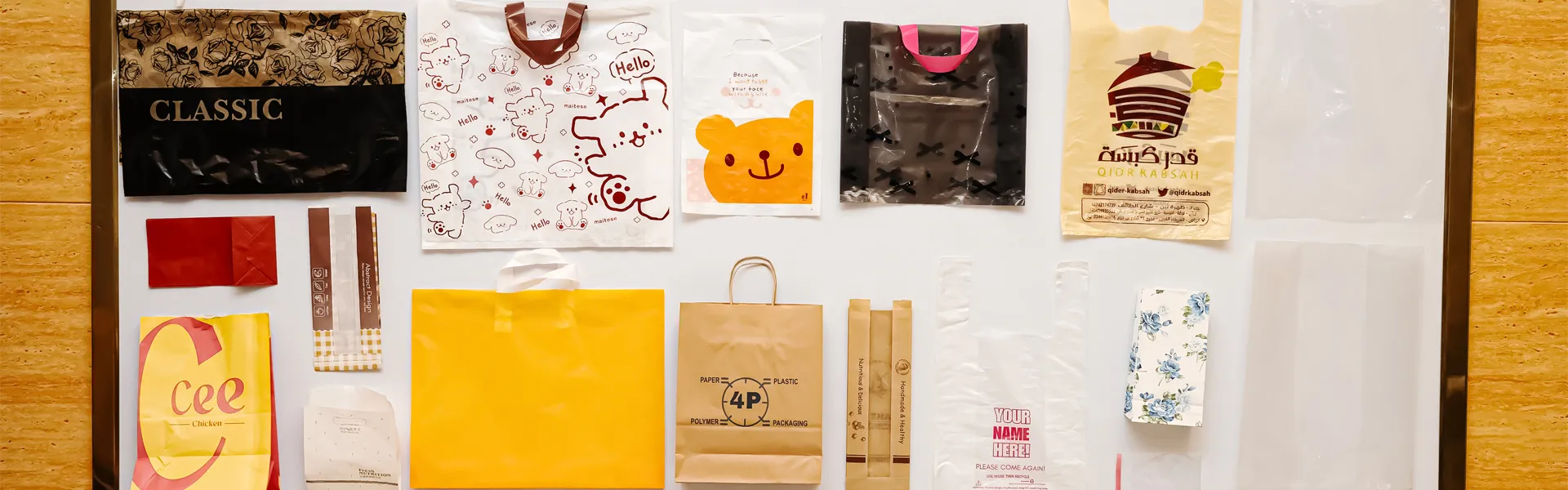
The rapid development of global e-commerce has transformed the packaging industry. Delivery bags are no longer simple shields. They have become an important part of fast supply chain operations. As orders increase and lead times shorten, manufacturers need to increase production while keeping costs low and quality high. Traditional production methods, which rely heavily on manual labor and individual processing steps, are no longer suitable for current market demands. Because of this, the use of advanced automation has become a must for many manufacturers. Courier Bag Making Machine has played an important role in this change. It integrates different production processes into a single system, which helps improve efficiency of the entire packaging production process.
Automate processes to reduce labor costs and increase Output Capacity
Upgrading to an integrated automation system requires changes in labour demand and productivity in the first place. In the past, bag-makers used separate wind-up, printing, gluing, folding and winding stations. Each site requires workers and materials to move between different steps. Modern automated production lines combine these processes into a continuous production system, reducing manual operations. Automatic splicing units attaches new film rolls to running material without stopping. At the same time, advanced tension control systems ensures the stability of the material in production process. This helps reduce small production stops and material waste caused by restarting the machine.
From a cost perspective, this integration significantly reduces the requirement for labour. Whereas traditional production lines may require three to four workers per shift, fully automated systems typically require only one technician to monitor the machine and make small adjustments. In addition to labour cost savings, this will reduce the impact of worker shortages and reduce training costs associated with frequent staff turnover. More importantly, it allows workers to focus on technology monitoring and machine maintenance rather than repetitive manual labor. Research by the International Labour Organization shows that automation in light manufacturing can increase labor productivity by 30 to 50 per cent in the first year, mainly because it reduces unnecessary processing time [1]. This high production capacity makes Courier Bag Making Machine an important part of mass packaging production.
High Speed Packaging ensures faster delivery of packaging orders.
packaging manufacturing is not just producing more bags per minute. It's also about making supply chains more stable. Modern machinery uses independent servo drive systems rather than traditional mechanical line shafts. This allows for precise control and stable operation at speeds of over 200 metres per minute. Dynamic balancing and vibration control technologies can help the machine to run at high speed for a long time without causing parts to wear and tear faster or reduce sealing quality. This high level of machine performance helps manufacturers cope with sudden increases in demand during busy shopping season without the need for extra overtime or external production support.
The value of high speed is not just production. It also shortens delivery times and supports just-in-time production patterns, which help reduce inventory costs for manufacturers and logistics companies. When a major retailer starts an unexpected promotion or a popular product suddenly increases orders, quick packaging production can help avoid delivery delays. Advanced system also adjusts the sealing temperature and pressure according to the productionspeed through the real-time monitoring system, and keeps the product quality stable during the high-speed operation. Industry studies have shown that the flexibility of packaging supply, the ability to increase production quickly without compromising quality, has become an important factor in supplier selection by large e-commerce enterprises [2]. A reliable Courier Bag Making Machine enables manufacturers to meet these demanding speed requirements consistently.

Precision control system to improve bag quality and reduce Material Waste
Efficiency is of little value if the product does not meet quality requirements. Material waste is one of the biggest hidden costs in soft packaging production. It can account for 5% to 8% of total production costs. Precision control systems help solve this problem through closed-loop feedback systems. Photoelectric sensors and visual systems continuously check the printing position, cutting length and bonding application. They adjust in milliseconds. Online inspection systems can also find and remove defective bags before they reach the winch. This helps prevent customer complaints and high returns.
The use of materials can be improved in many ways. Accurate length control reduces waste between cuts. Precise adhesive control can prevent too much adhesive and cause blockage and waste, prevent too little adhesive and reduce sealing strength. Color registration system helps to achieve correct alignment more quickly, thus reducing material waste during product changes. According to technical guidance of the Sustainable Packaging Coalition, improved process control in soft packaging production can reduce material use by 2 to 5 per cent while improving product quality [3]. For lower-margin manufacturers, those savings can add up quickly. Courier Bag Making Machine with these precision systems can help companies maintain product quality and control production costs even when raw material prices change.
Multi-Functional Features Enable Flexible Production for Different Courier Bag Types
Changes in the market require manufacturers to have more flexible production systems. Retailers now need bespoke designs, different bag sizes, security features such as forgery-proof seals and more sustainable materials. Single-use machines cannot meet these different needs at a reasonable cost. Modern integrators solve this problem through modular design. Rapid tool changes, width-adjustable systems and preserved production settings allow operators to replace different types of bags in minutes rather than hours. This greatly improves Overall Equipment Effectiveness (OEE) and reduces machine setup time.
Compatibility of materials is also important. Machines need to deal with traditional polyethylene as well as new biodegradable and synthetic films. These materials often have different heat resistance and strength properties. Comprehensive features including inline perforation, release liner application, barcode printing, hole punching eliminate the need for additional processing steps. Studies of Flexible Manufacturing Systems in packaging have shown that this flexibility reduces in-process inventory and makes small-scale production more practical [4]. This versatile design enables Courier Bag Making Machine to quickly respond to changing market demands and growing demand for sustainable bespoke packaging.
Conclusion
Automation, speed, accuracy and flexibility of modern courier bag production equipment help to address many of the challenges in today's supply chain. These machines do more than just make production faster. It also changes the basic cost structure of packaging manufacturing. By reducing the need for manual labor, supporting rapid order response, reducing material waste, and handling different product designs, they help manufacturers build stronger advantages in the marketplace. As the industry moves toward digital and higher environmental standards, choosing devices with these characteristics will affect which manufacturers can grow and which may face difficulties. Investment in a high-performance Courier Bag Making Machine is therefore a strategic decision that directly impacts long-term competitiveness.
References
[1] International Labour Organization (2022). ::Automation and productivity growth in light industry: global trends and regional Variationss. ILO Research Department Working Paper Series.
[2] Journal of Supply Chain Management (2023). ::Packaging Supply Elasticity as a determinant of E-commerce Vendor Performance: An Empirical Analysis. Vol. 59, No. 3.
[3] Sustainable Packaging Alliance (2021). Process optimization guidelines for Flexible Packaging Converting: Material Efficiency and yield improvement. SPC Technical Resource Library.
[4] International Journal of Industrial Engineering (2022). Flexible Manufacturing System Adoption in Packaging Industry: A Case Study on Adaptability to Changeover Reduction and Product Mix Adaptability. Vol 29, No. 4


