

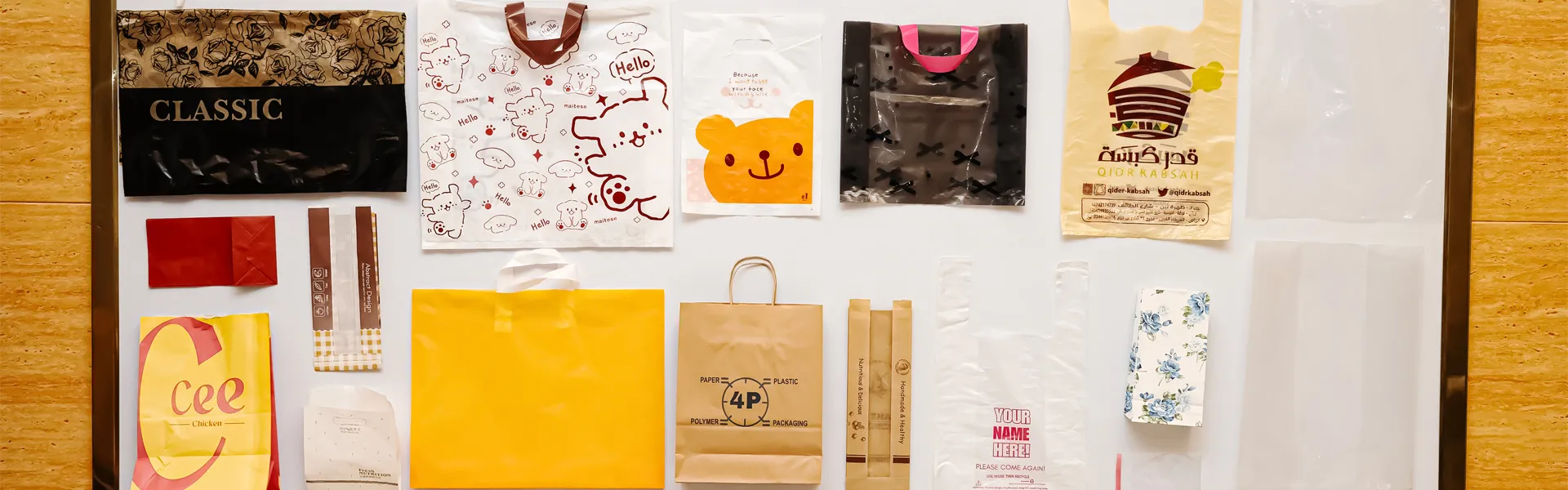
A computer side sealing heat cutting bag making machine is one of the workhorses of flexible packaging production - the equipment that converts rolls of flat film into individual bags by sealing the side edges and cutting them to length, all in one continuous process. What distinguishes the computer-controlled version from purely mechanical predecessors is the level of parameter control it brings to what would otherwise be an imprecise thermal process. Temperature, pressure, cut length, and line speed are all managed by a PLC or industrial computer system, making the output far more consistent across runs and across operators.
This article explains the mechanical and thermal logic behind how a computer side sealing heat cutting bag making machine operates, what quality variables it manages, and why computer control matters in high-volume bag production.

What the Machine Does
The machine takes a roll of tubular or flat plastic film - typically LDPE, HDPE, LLDPE, BOPP, CPP, or laminated film constructions - and produces finished bags through three simultaneous or sequential operations:
Feeding: advancing the film at a controlled rate
Side sealing: applying heat and pressure to weld the side edges together
Heat cutting: severing the bag at the top and bottom of each seal cycle, producing a discrete finished bag
In a flat-film configuration, the machine seals the two lateral edges of the film, creating a bag body with two side seams and an open top. In a tubular film configuration, the machine seals the fold line of the tube on both sides, leaving one continuous edge open for filling.
The computer side sealing heat cutting bag making machine adds digital precision to each of these steps - not just in timing, but in the consistency of every parameter that determines seal quality.
The Heat Sealing Mechanism
Heat sealing is fundamentally a thermal welding process. When two polymer film surfaces are pressed together at elevated temperature and held for a defined time, the polymer chains at the interface diffuse across the boundary, and upon cooling, the two surfaces become permanently bonded.
The "sealing window" - the combination of temperature, pressure, and dwell time that produces an acceptable bond - is specific to each film material. For LDPE, the normal sealing temperature range is between 120 and 160°C. But for BOPP, it is closer to 100–130°C. This is because BOPP melts at a lower temperature. So going below the range gives a weak or partial bond. And going above it can cause burning, film warping, or sticking to the seal bar.
A 2021 review in Packaging Technology and Science (Wiley) about seal strength in soft food packages said that the link between these three factors is not just a simple sum. So temperature, pressure, and hold time affect each other in a non-straight way. And the best mix changes depending on film thickness, coating type, and whether the seal must handle hot-fill or cold-chain conditions. So computer-controlled machines handle this complex job by saving calibrated recipes for each film type. Then they pull them up by product code. So they do not rely on the worker's experience to set the numbers by hand.
On a computer side sealing heat cutting bag making machine, the sealing station typically consists of:
A heated seal bar (the upper sealing element), often with embedded thermocouples feeding back to the controller
An anvil or counter-bar (the lower element) against which the film is pressed
Pneumatic or servo-driven actuators that bring the bars together under controlled pressure
A PLC or IPC (industrial PC) that manages the temperature PID loop, the pressure profile, and the open-close timing
The heat cut bar at the top and bottom of each bag length performs two functions simultaneously: it seals the top edge of one bag while cutting the bottom edge of the bag above it, using a heated wire or knife blade.
The Role of Computer Control
The "computer" in the name is not a marketing descriptor - it refers to a genuine architectural shift in how the machine is controlled.
Early bag-making machines used mechanical cams to define cycle timing. The same cam that controlled when the seal bar opened and closed also set the cut length - any change in bag size required physical cam substitution. This made changeover slow, operator-dependent, and imprecise.
A computer side sealing heat cutting bag making machine replaces mechanical cams with electronic motion control. A typical modern system uses:
Dual servo motors for film traction: one on the unwind stand and one on the main drive, coordinated by the controller to maintain constant film tension and accurate fixed-length feeding
PLC-based heat sealing control: closed-loop PID temperature regulation keeps seal bar temperature within ±1°C of setpoint, critical for consistent seal strength
Touch-screen HMI with a recipe database: operators select a product code corresponding to a stored parameter set - bag length, film type, seal temperature, cut temperature, line speed - and the machine self-adjusts
Encoder feedback on the film drive: the controller knows the exact film position at all times, allowing precise synchronization between the seal bar cycle and the cut blade cycle
This architecture reduces changeover time from the 30–60 minutes typical of cam-based machines to under five minutes for a computer side sealing heat cutting bag making machine with electronic recipe recall.
The Heat Cutting Process
Heat cutting is different from mechanical cutting. A heated blade or wire does not merely slice through the film - it melts a narrow channel through the material as it descends. The molten polymer flows together at the cut edge, creating what is called a thermally sealed edge. This is what prevents the bag from having a frayed or open-cut perimeter.
The quality of a heat cut depends on:
Blade temperature: too low produces an incomplete seal at the cut edge; too high causes the film to stick to the blade or creates ragged edges
Blade descent speed: a fast descent with insufficient dwell time leaves an incomplete bond at the edge
Film tension: tension must be controlled during the cut to prevent the film from stretching or tearing
Research in Materials Today: Proceedings (Elsevier, 2023) looked at seal quality in soft packing. It found that the clean edge is very sensitive to how blade temperature and film tension work together at the seal corners. So this is exactly what happens at the top and bottom seal bars on a bag machine. So computer control lets you adjust these settings and keep them within a narrow range. So manual machines cannot do this reliably.
Film Materials and Their Sealing Behavior
The computer side sealing heat cutting bag making machine must handle many film types. So each one has its own heat traits:
LDPE (Low-Density Polyethylene): This film is used a lot because it is flexible and seals well. So LDPE has a wide sealing range. And it can handle more temperature change than many other films.
HDPE (High-Density Polyethylene): This film has a higher melting point than LDPE. So it needs higher seal bar temperatures. So HDPE is stiffer and makes crisper bags. But it is more sensitive to too much heat.
BOPP (Biaxially Oriented Polypropylene): Crystal-clear and widely used for food packaging. BOPP has a narrow sealing window and is prone to "burn through" if bar temperature is not precisely controlled - precisely the scenario where PID temperature control adds the most value.
CPP (Cast Polypropylene): Similar optical clarity to BOPP but with better heat sealability and a wider processing window.
Laminated films: Two-layer constructions where the inner layer is the sealant and the outer layer provides barrier or print. The machine must seal through the outer layer to the inner layer, which requires careful temperature profiling.
The flexibility to switch between materials - and between different thicknesses of the same material - is one of the strongest arguments for the electronic control approach. A recipe system allows optimized parameters for each combination to be stored and called up without manual trial and error.
Production Output and Quality Variables
Modern high-speed computer side sealing heat cutting bag making machine units output between 30 and 200 bags per minute, depending on bag size, film gauge, and machine configuration. Double-lane machines can reach the upper end of this range by processing two film widths in parallel.
The quality variables that determine whether the output meets specification are:
| Variable | What Affects It | How the Machine Controls It |
|---|---|---|
| Seal strength | Temperature, pressure, dwell time | PID loop on seal bar; pneumatic pressure regulation |
| Cut edge quality | Blade temperature, descent speed | Thermostatic blade control; servo-driven blade descent |
| Bag length accuracy | Film feed precision | Dual servo traction with encoder feedback |
| Bag squareness | Film tension uniformity | Tension control on unwind and main drive |
| Seal alignment | Machine geometry, die clearance | Mechanical precision; regular maintenance schedule |
ASTM F88 is the standard test for how strong a seal is when you peel it. So it gives a number-based way to check if a machine's seal quality is good enough for a specific job.Bag makers targeting food packaging typically target seal peel values above 8 N/15mm as a minimum, with hot-tack performance measured immediately after sealing to account for stress during the filling process.
Why Computer Control Improves Yield
The business case for the computer-controlled version comes down to yield - the percentage of bags produced that meet specification without rework or rejection.
In cam-based machines, the primary sources of yield loss are:
Seal strength variation due to temperature drift as the seal bar heats or cools during a run
Length inconsistency due to mechanical wear in the cam profile
High scrap rates during changeover as operators dial in settings by trial
A computer side sealing heat cutting bag making machine addresses all three. PID temperature control maintains consistent seal temperature throughout a production run and recovers quickly after a stop. Electronic length setting eliminates the mechanical wear that causes progressive length drift. And recipe recall means changeover scrap is minimized because the next product's parameters are pre-optimized, not estimated.
A 2024 technical document from RDM Test Equipment analyzing heat seal parameter optimization noted that maintaining optimum sealing conditions in production - rather than estimating settings and adjusting reactively - is the single largest controllable factor in reducing seal-related waste. Computer-controlled machines are the practical implementation of this principle.
Summary
The computer side sealing heat cutting bag making machine takes a straightforward mechanical concept - feed film, seal edges, cut to length - and surrounds it with enough control system sophistication to produce consistent, high-quality output across a wide range of materials and bag sizes. The heat sealing mechanism is a precision thermal welding process that depends on temperature, pressure, and time being held within tight tolerances. The computer control system exists to manage exactly those tolerances, reduce operator dependency, and accelerate changeovers.
For procurement teams evaluating bag-making equipment, the relevant comparison is not between different machine brands - it is between control architectures: how quickly can the machine switch products, how precisely does it hold seal parameters over a production run, and how much scrap does it generate during normal operation. On each of these dimensions, the computer-controlled machine offers measurable advantages over mechanical alternatives.
References:
- Zhang, Y., et al. (2021). Understanding the factors affecting the seal integrity in heat sealed flexible food packages: A review. Packaging Technology and Science, Wiley. DOI: 10.1002/pts.2564
- M Authors. (2023). Observing the effect of pressure and temperature on the seal characteristics in flexible packaging intersections. Materials Today: Proceedings, Elsevier. DOI: 10.1016/j.matpro.2023.04.
- University of Twente. (2026). Understanding Seal Integrity: Sealing and Closing of Flexible Packaging. Research Repository.
- RDM Test Equipment. (2024). Heat Seal Parameters of Flexible Polymer Film and Finished Package Seal Integrity. Technical Note.
- ASTM F88/F88M-21. Standard Test Method for Seal Strength of Flexible Barrier Materials. ASTM International.
- Biji, K.B., et al. (2023). Seal materials in flexible plastic food packaging: A review. Packaging Technology and Science, Wiley. DOI: 10.1002/pts.2732


