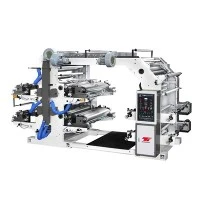
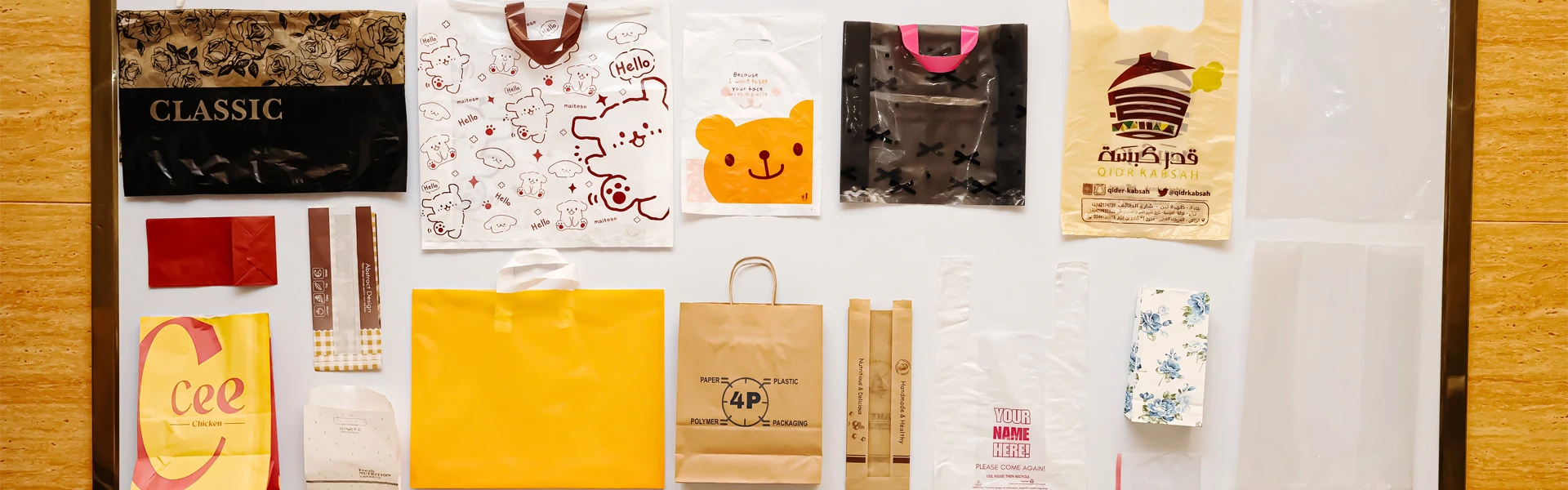
Plastic bag manufacturing at commercial scale demands machinery that solves a fundamental production challenge: how to convert continuous rolls of flat film into finished, dimensionally consistent, structurally sound bags at speeds that make operations economically viable. The cutting bag configuration-distinct from the T-shirt bag design discussed in other contexts-serves a broad range of applications including flat poly bags, merchandise bags, produce bags, and industrial packaging bags where a straight-cut bottom seal and open top define the finished product geometry.
Among the machinery architectures available for this production category, the double-layer four-line configuration consistently attracts attention from high-volume manufacturers because its parallel processing approach multiplies output without proportionally increasing machine footprint, operator requirements, or capital cost per unit of capacity.
This article works through the complete operational sequence of a Double Layer Four Lines Cutting Bag Making Machine, examining what happens at each stage, why the engineering choices matter, and where quality variation originates in practice.

Defining the Architecture: Why "Double Layer Four Lines" Matters
The terminology defines how this machine multiplies output relative to simpler configurations.
Double layer means the machine simultaneously processes two separate film webs running in parallel through the same production sequence. Each layer maintains its own tension path and film management, but both pass through shared sealing and cutting stations. The two layers may produce identical bags or, in some configurations, two different bag specifications simultaneously if tooling accommodates different widths.
Four lines indicates that four bag widths run side-by-side across the film width in each layer. Sealing and cutting tooling spans the entire web width, processing all four positions in each machine cycle.
The output multiplication becomes clear: a machine running 250 cycles per minute with four lines across two layers produces 2,000 bag units per minute under theoretical maximum conditions. After you add in roll changes, start-up settling time, and normal slowdowns, then a well-kept Double Layer Four Lines Cutting Bag Making Machine usually makes 1,400–1,700 bags per minute for standard bag types.
So this machine setup is a good fit for basic bag production. In that case, you need the same size and same quality across very large production runs.
Stage 1: Film Unwind and Roll Management
Production starts at the unwind stations. There, HDPE or LDPE film rolls feed material to each of the two layers. Roll specs - film thickness (usually 10–50 microns, depending on the job), width, and core size - are picked based on the bag type being made.
Unwind stands support film rolls on mandrel shafts with pneumatic or magnetic braking systems. As the roll unwinds and its diameter decreases, the rotational inertia changes-a full roll resists acceleration and deceleration differently than a nearly depleted one. Braking systems compensate automatically, maintaining consistent back-tension on the film as it feeds into the machine regardless of roll diameter.
Tension consistency at the unwind stage determines dimensional consistency throughout the entire production run. HDPE film stretches under tension, and if tension varies between the beginning and end of a roll, finished bag length will vary correspondingly-even with identical downstream settings.
Automatic roll change systems on production-grade machines allow operators to splice a fresh roll to the depleted film tail without stopping the machine. The splice must be made cleanly and with minimal thickness discontinuity, since thick or irregular splices can jam guide rollers or affect sealing quality as the joint passes through heat stations.
Stage 2: Film Path Routing and Tension Control
From the unwind stations, both film layers go through multi-roller paths to the processing stations. This path does more than just carry the film.
Accumulator sections store extra film between the unwind station and the processing stations. An accumulator has a floating roller or a set of rollers that can move to take in or let out film slack. When the unwind station makes a splice or has a short speed change, then the accumulator keeps a steady film supply to the downstream stations. So the line does not stop.
Dance roller systems provide real-time tension feedback and correction. A dancer roller floats on pneumatic pressure and moves up or down in response to tension changes. Its position is monitored by a sensor connected to the drive control system, enabling automatic speed corrections that keep tension within programmed tolerances.
Edge guiding systems monitor lateral film position using photoelectric or ultrasonic sensors and apply micro-corrections to film path alignment. On a four-line machine, lateral misalignment of even 2–3mm shifts all four bag lines out of register with sealing and cutting tooling-producing bags with asymmetric seals or cuts that fall outside specification.
The two film layers must arrive at the forming station with matched tension and aligned lateral positions. Differential tension between layers produces bags where the two film faces have different elongation histories, which can cause distortion or layer separation in the finished product.
Stage 3: Bottom Seal Formation
Unlike T-shirt bags that use the manufacturer's film fold as the bag bottom, cutting bags require a formed bottom seal. This seal closes the bag base and must withstand the mechanical stress of product loading and handling.
Bottom sealing in a cutting bag machine occurs in one of two configurations depending on machine design:
Transverse sealing with film folded lengthwise creates the bag by folding a flat film sheet in half along its length (creating the bag bottom fold) and then making transverse seals and cuts at regular intervals. This configuration is common for center-fold bag production.
Side-sealed configuration uses a tubular film (pre-formed by the film manufacturer) and creates seals at both sides of the bag, with the seal bars running parallel to the direction of film travel rather than perpendicular.
For the cutting bag configuration, the sealing station uses heated sealing bars that span the full web width. On a four-line machine, the sealing bar contact surface is segmented or continuous across all four lines. Bar temperature, contact pressure, and dwell time are the three critical parameters that determine seal quality:
Temperature controls how completely the film melts and fuses. Too low produces weak or incomplete seals; too high causes film degradation, thinning at the seal zone, or seal appearance defects.
Pressure ensures intimate contact between the film faces and the heating surface, enabling consistent heat transfer.
Dwell time determines how long the film remains in contact with the heated bar. This parameter interacts with temperature-lower temperatures require longer dwell times to achieve equivalent heat penetration.
Temperature uniformity across the full bar width is a persistent maintenance challenge. Heating elements age at different rates, and a bar with uneven temperature distribution produces seal quality variation between the inner and outer bag lines-often not visible until seal strength testing reveals the discrepancy.
Stage 4: Cooling and Seal Setting
Immediately after the heated seal bars retract, the film carries freshly formed seals that are still at elevated temperature and therefore mechanically vulnerable. Applying tension to the film before seals cool adequately causes seal stretching, thinning, or failure.
Cooling bars or belts follow the sealing station and apply controlled pressure to the seal zone while it cools below the film's softening temperature. This step quenches the seal in a dimensionally stable state, preventing distortion as the film indexes forward.
Cooling efficiency affects achievable production speed. Machines with poor cooling cannot run at their top cycle speed without hurting seal quality. So the limit is not sealing speed but cooling time. High-output machines put a lot into cooling station design. Then they can run faster cycles without losing seal strength.
Stage 5: Cutting and Bag Separation
With seals made and cooled, the film has a long line of connected bag units that need to be cut apart. The cutting station does this cutting with one of several mechanical ways.
Rotary cutting uses a spinning blade or roll that touches the film against an anvil roll. Rotary systems let the film keep moving instead of stopping and starting. So they allow higher cycle speeds. Blade care and gap tuning between the blade and anvil are very important. Worn blades give rough cut edges. And wrong gap settings cause tearing instead of clean cutting.
Reciprocating knife cutting uses a straight blade that moves perpendicular to the film surface in a timed cycle. This approach produces very clean, straight cut edges but requires the film to stop momentarily during cutting-making it inherently slower than rotary approaches.
Hot knife cutting integrates cutting and final seal formation in one step. The heated blade severs the film while simultaneously forming a fused edge at the cut. Hot knife systems eliminate the need for separate cooling sections for the cut edge but require careful temperature management to prevent edge quality problems.
On a Double Layer Four Lines Cutting Bag Making Machine, cutting tooling must simultaneously process all four lines across both film layers in each cycle. Blade alignment and sharpness uniformity across the full cutting width determines whether all eight bag positions (four lines × two layers) receive equivalent cut quality in each machine cycle.
Stage 6: Perforation for Multi-Bag Roll Packs
Many cutting bag applications require finished bags wound onto dispensing rolls with perforations between units. Grocery produce bags, bread bags, and other high-consumption retail applications typically specify this format.
Perforation stations create a series of small cuts across the film width at each bag boundary. The perforation pattern-cut length, gap between cuts, and cut spacing-determines the force required for bag separation at the dispenser. Standards for retail produce bag dispensers often specify perforation separation force within a defined range: too strong and consumers struggle to separate bags; too weak causes premature separation during roll winding or handling.
After perforating, bags wind onto core tubes. Winding tension must remain consistent throughout the roll build to prevent telescope (uneven roll layers that protrude beyond the roll face), which causes jamming in retail dispensing systems. Torque-controlled winding drives automatically adjust motor torque as roll diameter increases, maintaining consistent surface tension throughout the winding cycle.
Stage 7: Output Handling-Flat Pack and Stacking
For flat-pack bag production (not roll format), output systems collect the cut bags and pile them into counted stacks. Counting accuracy at this step directly affects packing speed later and how correct the inventory count is. So stacks with wrong counts cause problems for retail packing and more customer complaints.
Stack formation systems use mechanical guides, air jets, or vacuum belts to line up bags the same way as they pile up. Good stack alignment cuts down on packing work and stops the stacks from shifting in cartons during shipping.
Banding or wrapping stations put film bands or stretch wrap around the finished stacks. Then the stacks stay lined up during handling and shipping. Some high-output lines also have robotic carton packing that puts counted stacks into shipping boxes with no manual help.
PLC Control: Synchronizing the Full Sequence
The Double Layer Four Lines Cutting Bag Making Machine works with many stations running at the same time. And their timing must be exactly matched. PLC-based control systems handle this matching. So they keep the film feed drives, seal bar cycles, cutting timing, perforation registration, and winding drives all working together as one system.
Servo-driven film advance provides the indexing precision that determines bag length consistency. Modern servo systems hold index length accuracy within ±0.3–0.5mm across sustained high-speed production runs-a standard that mechanical cam-driven systems from earlier equipment generations cannot reliably meet.
Recipe management stores complete job parameter sets that operators recall when switching between bag specifications. A complete recipe includes bag length (index length), seal temperature, dwell time, cut registration offset, perforation spacing, and output count per pack. Recalling a stored recipe reduces changeover time from 60–90 minutes of mechanical adjustment to 10–20 minutes of parameter verification.
Fault detection and controlled stops stop bad bags from spreading. When sensors find film tension problems, seal temperature changes, or misregistration, then the control system does a controlled stop. This keeps the machine state for fixing the problem. So it is better than an uncontrolled stop that can hurt the tooling or make safety risks.
Quality Monitoring Framework
Knowing the steps in the process shows where to put quality monitoring for the most benefit.
Seal strength testing should be done at set times. For high-volume runs, test every hour. Use a tensile tester to measure the force needed to peel or break the seal. Then seal strength numbers plotted over time show heating problems before they become big enough to make visible defects or field failures.
Dimensional checks of bag length and width catch index length drift or film tension changes that change the finished size. Use gauge blocks or digital calipers on sample bags at set times. Then you get objective data for process control records.
Cut edge quality inspection checks for ragged edges, incomplete cuts, or film tearing at cut locations. These defects indicate blade wear or incorrect cutting gap settings that require maintenance attention.
Layer registration verification checks that the two film layers align correctly in the finished bag. Misregistered layers produce bags where one face extends beyond the other at the cut or seal edges-a defect that affects both appearance and seal overlap dimensions.
Conclusion
The operational sequence of a double-layer, four-line cutting bag machine progresses from film unwind through tension management, seal formation, cooling, cutting, perforation, and output handling in a timed cycle that repeats hundreds of times per minute. Each stage depends on the accuracy of preceding stages, and disruption at any point propagates through all downstream operations.
For procurement professionals evaluating equipment, the sequence framework supports more targeted specification questions: How does the machine handle tension transitions during roll splicing? What cooling station design is used, and what is the rated cooling capacity at maximum speed? How does the control system maintain seal temperature uniformity across the full bar width? These questions surface performance differences between equipment options that simple output rate comparisons miss entirely.
For production teams managing existing equipment, the step-by-step framework maps where variation enters the process and where monitoring resources deliver the highest return on quality assurance investment.
References
Plastics Industry Association. Film & Bag Manufacturing: Equipment Technology and Process Standards. PLASTICS Technical Series, 2023.
ASTM International. "Standard Test Method for Seal Strength of Flexible Barrier Materials." ASTM F88/F88M-21, 2021.
Society of Plastics Engineers (SPE). "Advances in High-Speed Film Conversion: Sealing and Cutting Technology for Polyethylene Films." SPE ANTEC Conference Proceedings, 2022.
Flexible Packaging Association. "Process Control Fundamentals for High-Volume Film Bag Production." FPA Technical Guidance Series, 2022.
Packaging Technology and Science (Journal). "Effect of Sealing Parameters on Bond Strength Consistency in Multi-Lane Polyethylene Film Processing." Packaging Technology and Science, Vol. 36, Issue 7, 2023, pp. 389–405.